ZARİF ENERGY
PREPARING YOUR HOME'S ENERGY FOR AUTUMN
Letting go of excess, opening up the flow again and entering the new season with a lighter home
Autumn changes more than our wardrobe, our table or the rhythm of our days. As the days shorten and life gradually moves from outdoors to indoors, the atmosphere of our home changes too.
The windows that stayed open all summer begin to close, evenings are spent at home, and blankets and warmer textures start to reappear. This very season of transition is a lovely time to look at our home with fresh eyes.
In the teachings of Feng Shui, the home is not seen merely as a physical space we live in. Doors, light, water, objects, mirrors and empty spaces are all associated with the movement of life energy, known as chi.
At Zarif Energy this month, our aim is not to transform the home from top to bottom.
It is to reduce the excess, notice the points that block the flow, and enter autumn with a more spacious home.
IT ALL BEGINS AT THE DOOR
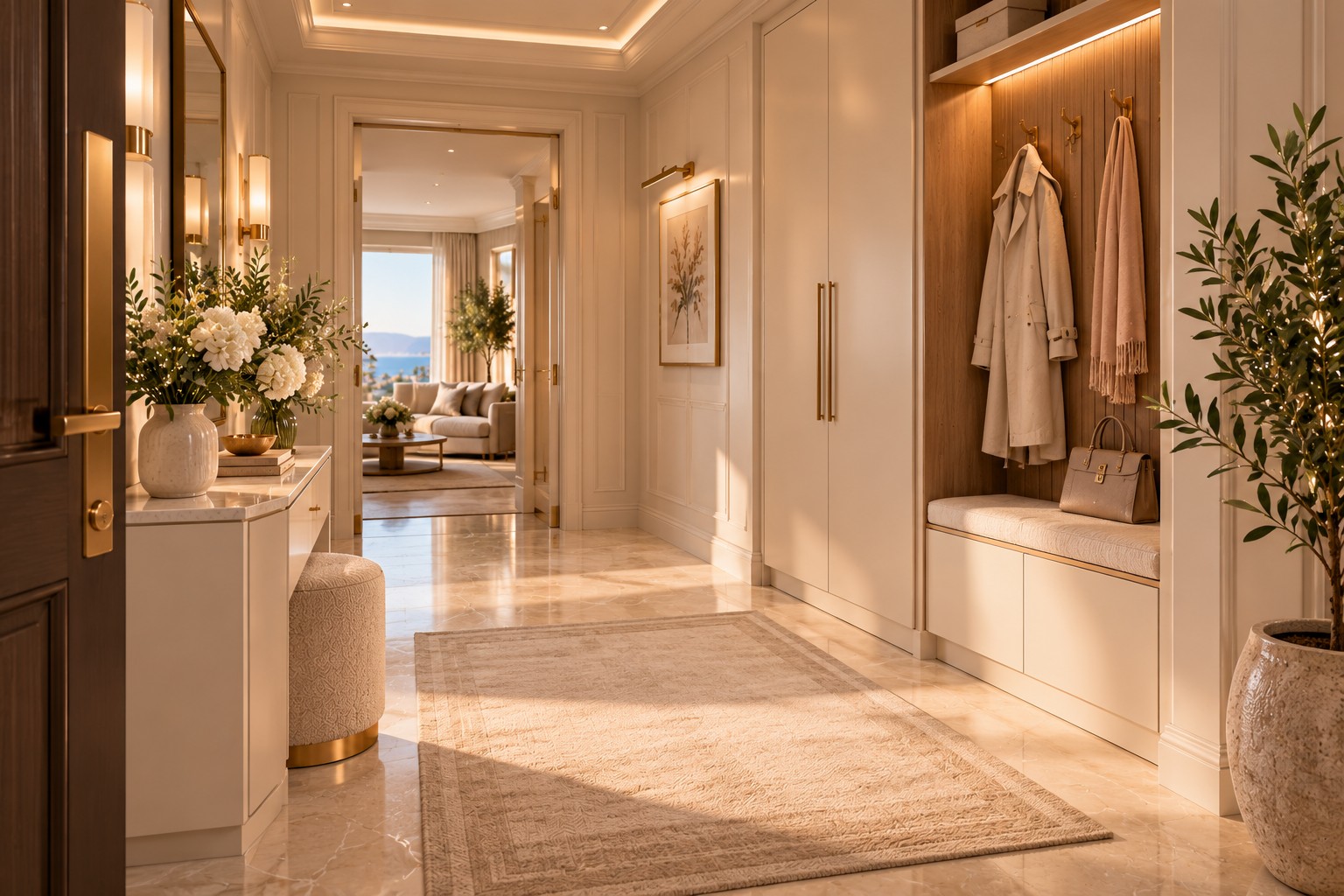
Because the entrance hall is the first space we meet on entering a home, in Feng Shui the main entrance is regarded as one of the home's most important thresholds of energy. Traditional teaching holds that life energy, chi, enters the home through the front door.
So begin your autumn arrangement from outside the door.
Does the door open easily and fully? Are there shoes, bags, boxes or other things behind it that stop it from opening? Is the door handle sound? Does the bell work? Is the entrance bright enough?
Pay attention, too, to the view that greets you the moment you open the door.
An open hall stand filled to bursting, jackets hung one on top of another, bags, shoes and boxes left carelessly about all create visual congestion at the entrance. The Feng Shui approach prefers the main entrance to be as open, clean, orderly and easy to pass through as possible.
If you use a hall stand, it can ideally be one with doors, kept in order. Coats, shoes and accessories not in use that season can be stored elsewhere. Simply keeping only the pieces that are genuinely used in the entrance hall can transform the feel of the entrance considerably.
Another important element to consider at the entrance is the mirror.
In the traditional Feng Shui approach, placing a mirror directly opposite the main front door is generally not recommended. This is because it is believed that the chi entering through the door strikes the mirror and is symbolically sent back outside. The energy of abundance and prosperity is part of this symbolic reading, too; it is thought that the positive flow entering the home is reflected back towards the door instead of moving further inside.
A mirror directly opposite the door also constantly reflects the view outside into the home whenever the door is opened. So it is worth looking not only at the mirror itself, but also at what it reflects throughout the day.
This does not mean that no mirror can be used at the entrance. If a mirror is needed, it can be placed on a suitable side wall rather than directly opposite the door, positioned so that it does not reflect the door directly and shows a beautiful, orderly view.
When you open the door, let the first thing you see be spaciousness, not clutter.
Because in the symbolic language of Feng Shui, the entrance is not merely a door into the home; it is the threshold through which new opportunities, movement and life are invited in.
WHY DO WE KEEP WHAT IS BROKEN?
A cracked vase.
A clock that no longer works.
A cup with a broken handle that still sits in the cupboard.
A small electrical appliance that broke months ago.
A dried-out plant.
In Feng Shui, broken, faulty and long-unused objects are associated with stagnation. Beyond this, from the point of view of daily life, having things that neither work nor are used constantly in view creates needless clutter in the home.
During your autumn clear-out, ask yourself three questions:
Do I use it?
Does it work?
Does it still have a place in my life?
If the answer to all three is no, perhaps that object's time in your home has come to an end.
Donate or make good use of those still in usable condition. Mend what is broken; if you are not going to mend it, do not keep it.
Sometimes the first step towards making room for something new in the home is to free the space the old one occupies.
MIRRORS: WHAT ARE WE MULTIPLYING?
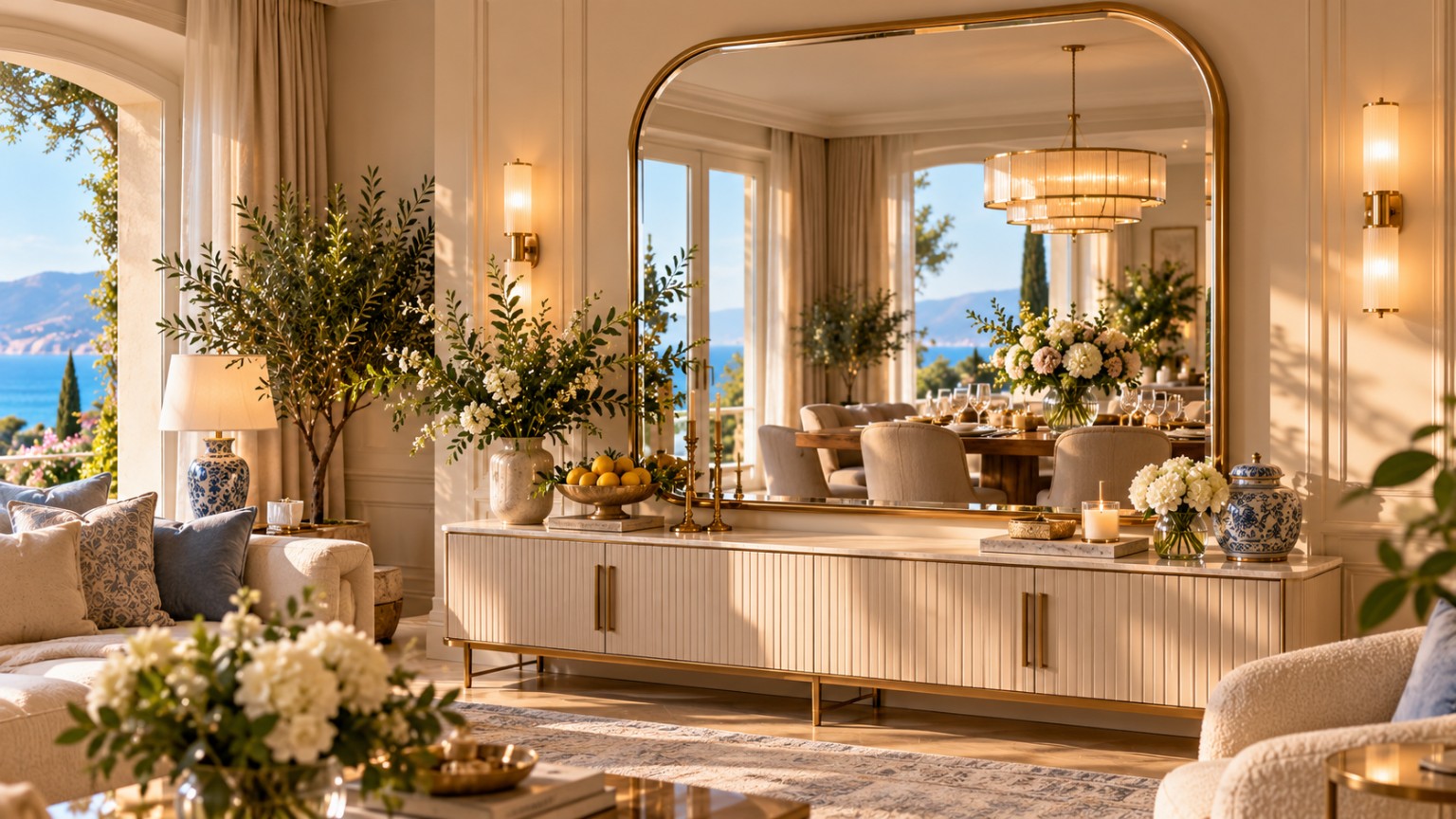
In Feng Shui, mirrors are regarded as one of the most powerful symbolic tools. This is not only because they reflect light, but because they are held to multiply, visually and symbolically, whatever lies before them.
So before thinking about the size of a mirror, ask yourself this:
What does my mirror see?
Opposite the mirror in the living room, there can be a view you enjoy looking at and would like to see multiplied in your home.
A healthy, thriving plant…
Fresh flowers…
A beautiful bowl of fruit…
A carefully laid dining table…
A view of a bright garden or greenery…
In the symbolic language of Feng Shui, these images, associated with abundance and life, reflected in the mirror represent the idea of abundance multiplying.
But if opposite the mirror there is always a cluttered desk, a rubbish bin, broken objects, a dried-out plant or a dark, neglected corner, that is exactly the image the mirror multiplies visually.
In short, when placing a mirror, look not only at the wall, but into the mirror itself.
THE PLACE OF WATER: THE PLACE OF FLOW
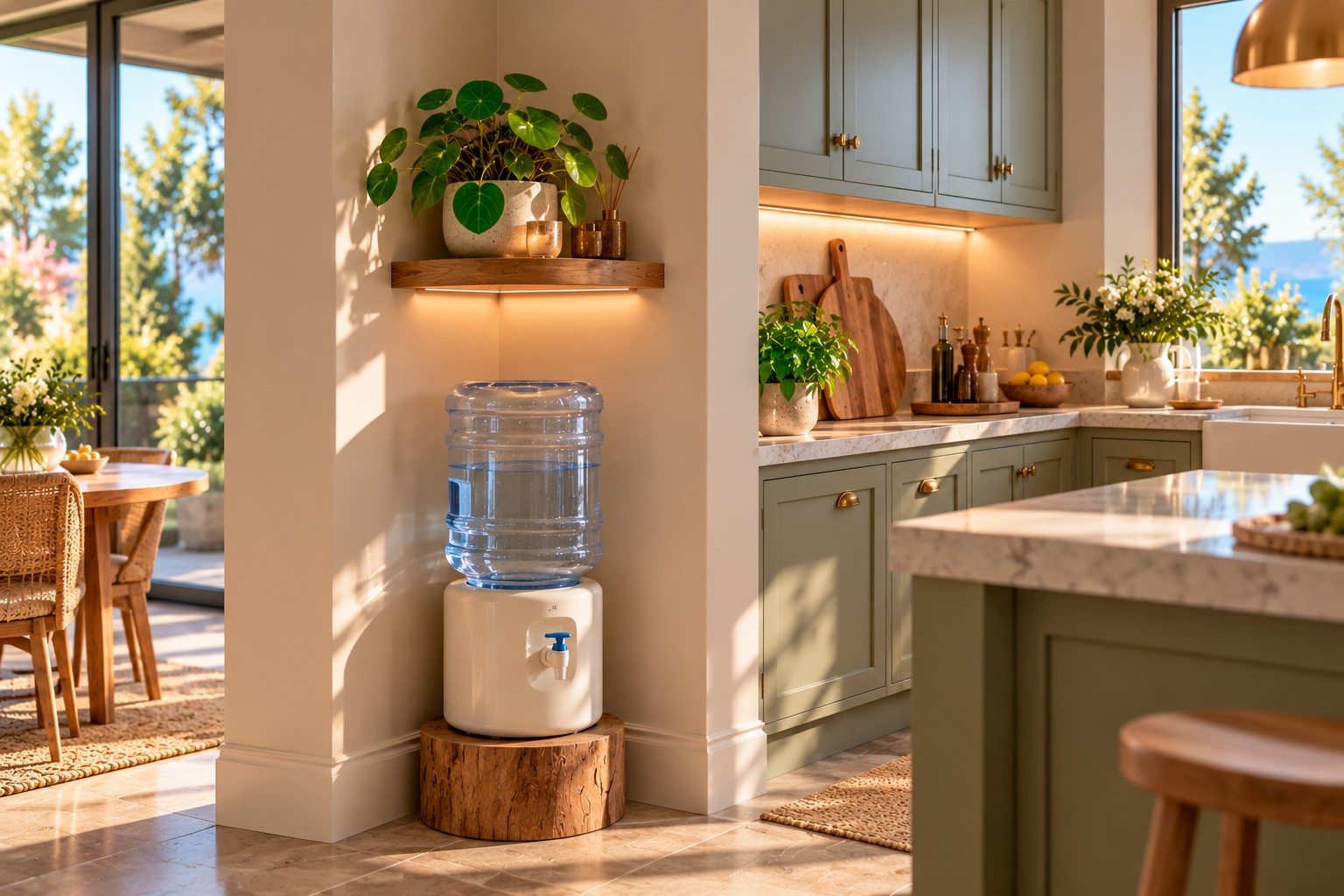
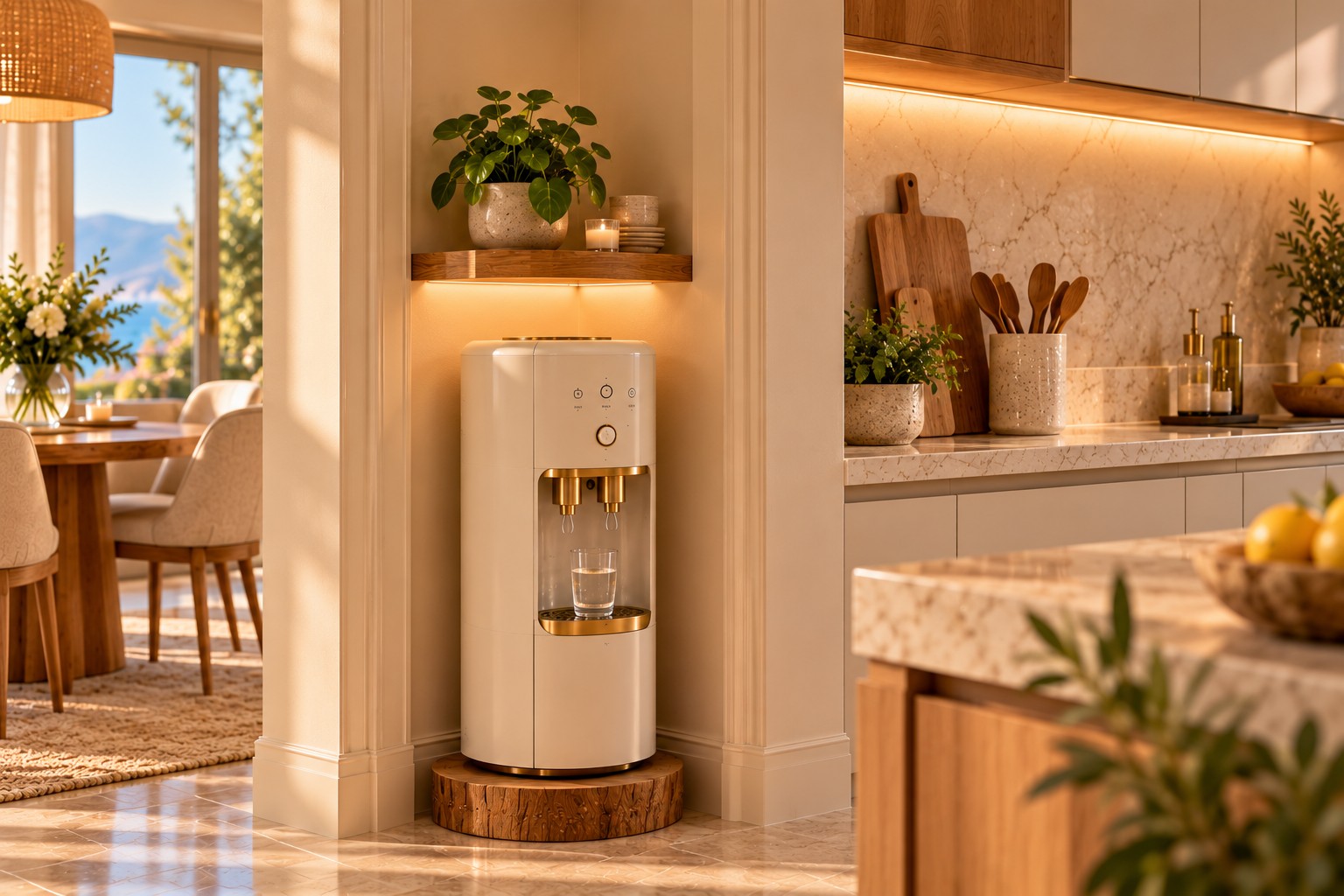
In Feng Shui, water is one of the fundamental elements associated with movement and flow. In some traditional interpretations, it is also symbolically linked with career, opportunities, abundance and financial flow.
For this reason, the placement of a water dispenser, small fountain or decorative water feature in the home is not seen as a detail to be chosen at random.
There is an important point here: in Feng Shui there is no single universal rule along the lines of "water must always be placed in the same compass direction in every home". The interpretation can vary according to the Bagua, the orientation of the home and the school of Feng Shui being followed.
In some common applications of the Bagua, the Southeast is associated with abundance and prosperity, and the North with career and life path. But this does not mean that the water dispenser must be placed in the Southeast in every home.
Especially when deciding where to place a large or constantly used water feature, it is wiser to consider the home's own layout and the Feng Shui approach being followed, rather than simply applying general formulas of the "put it in this direction" kind.
WATER, WOOD AND LIVING GREEN
In the teaching of the Five Elements, Water nourishes the Wood element.
So in the area where the water dispenser stands, using a wooden side table, a wooden surface or a natural wood detail, and adding a healthy, thriving plant nearby, can create a symbolically harmonious pairing.
Here, the condition of the plant matters a great deal.
Rather than keeping a yellowed, ailing or dried-out plant simply because it is a "money plant", choose one that is healthy and thriving.
Pachira, the money tree; Crassula, the jade or money plant; and lucky bamboo are among the plants most often associated with abundance, growth and flourishing in Feng Shui practice.
The number of stalks in lucky bamboo also carries different symbolic meanings. So bamboo can be chosen not merely as decorative greenery, but also according to the Feng Shui approach being followed. With the right care, bamboo can be grown in water or in soil.
Attention should also be paid to the other elements around the water dispenser.
Placing it right beside an intense source of heat such as a radiator, in particular, may not be a good choice, either for living plants or for the balance of the space. In the Five Elements approach of Feng Shui, the relationship between Water and Fire is also considered separately.
So when choosing the position of the water dispenser, consider three things together:
Direction.
The elements around it.
Living plants and real conditions of use.
THE BEDROOM: THE QUIETEST SPACE IN THE HOME
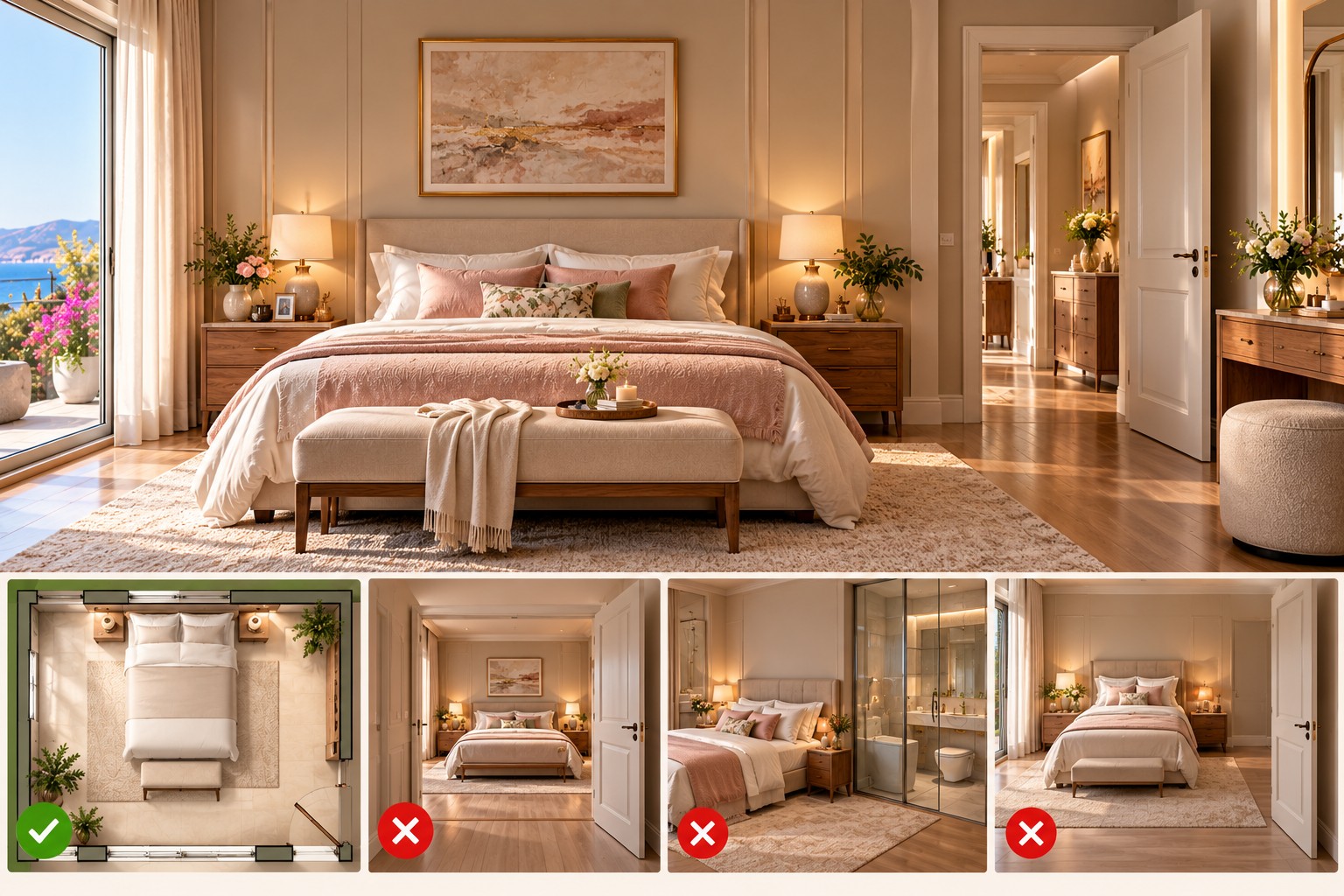
While we want movement and liveliness in the other parts of the home, in the bedroom we seek exactly the opposite:
Calm.
In Feng Shui, it is considered important for the bed to rest against a solid wall wherever possible, and to be positioned so that the sleeper can feel safe.
Having the foot of the bed directly in line with the door is one of the placements traditional Feng Shui does not favour. Instead, a position is preferred in which the bed has a view of the door but is not directly in line with it.
There are also Feng Shui approaches that advise against placing the head of the bed back to back with a bathroom or toilet wall that carries plumbing. If the layout of the room allows, a calmer, more solid interior wall can be chosen for the head of the bed.
As for the space under the bed, try not to turn it into a second wardrobe.
In Feng Shui, leaving the space beneath the bed as empty as possible, rather than filling it with suitcases, old boxes, unworn clothes and things that have not been opened for years, is associated with the flow of energy in the sleeping area.
SO WHICH WAY SHOULD OUR HEAD FACE?
Here, it would be misleading to treat any single direction as right for everyone.
In some Feng Shui systems, the sleeping direction is determined by a person's Kua number, birth details and the school being followed. Although the Southeast is associated with abundance in some readings of the Bagua, this does not mean that "everyone should sleep with their head towards the Southeast".
So when considering the direction of the bed, it is wiser to weigh your personal Feng Shui calculation together with the real architecture of the room.
THE MIRROR IN THE BEDROOM
In the Feng Shui approach, the position of the mirror in the bedroom is given particular importance.
The issue here is not only that a person sees their own reflection while sleeping at night.
A mirror should not reflect the bed directly at any hour of the day, even when the bed is empty.
This is because, in the symbolic language of Feng Shui, a mirror is held to multiply whatever lies before it. And the bed, especially for couples, represents togetherness, closeness and the intimate space of the relationship.
For this reason, in some Feng Shui interpretations, the bed appearing a second time in the mirror is associated with a third person, or people, symbolically entering the relationship.
This does not mean that a mirror actually brings a third person into a relationship in real life; it is one of the symbolic interpretations of Feng Shui.
But if this approach is to be followed, the basic principle is clear:
The mirror should not see the bed, and the bed should not appear in the mirror.
So, if possible, choose a position where the mirror does not face the bed.
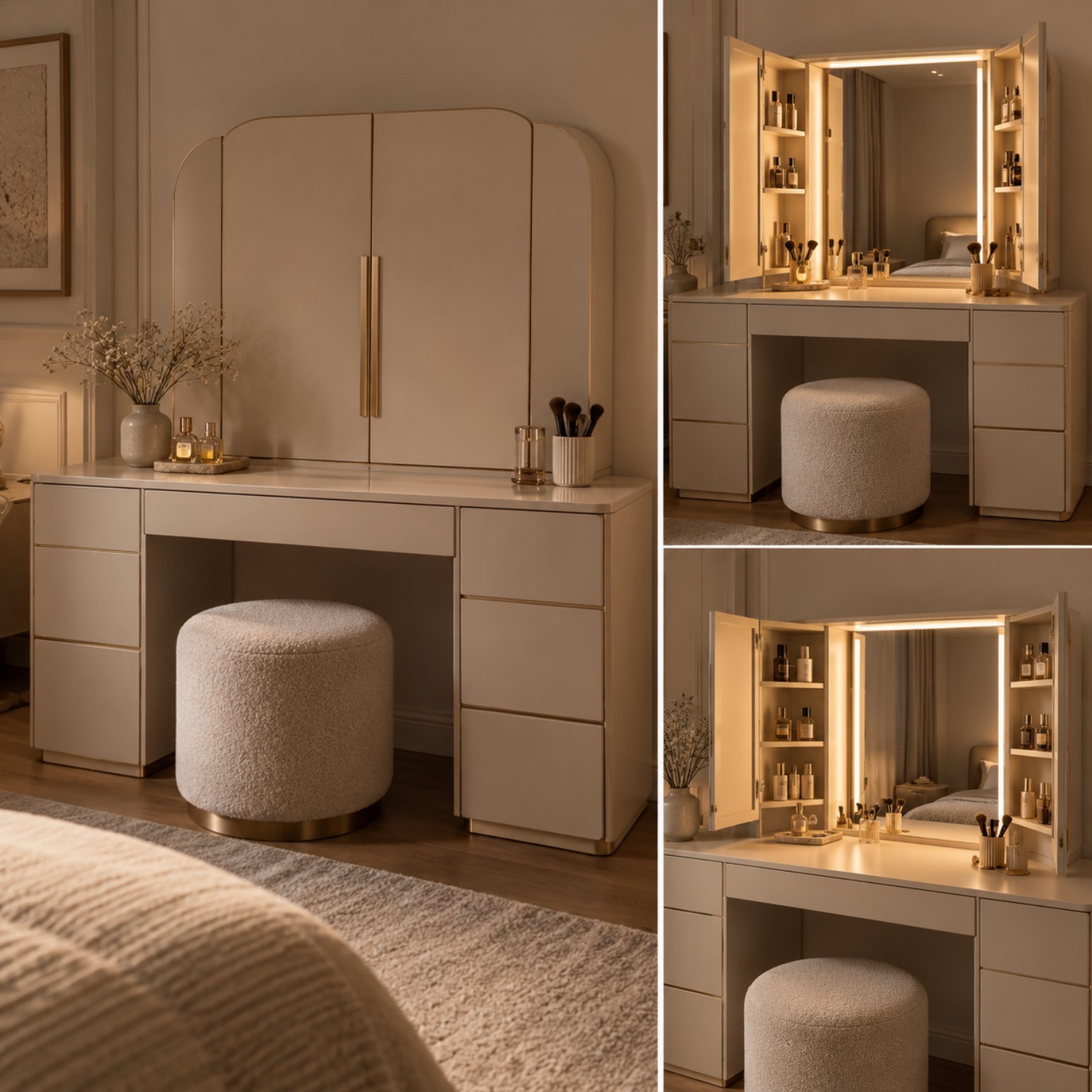
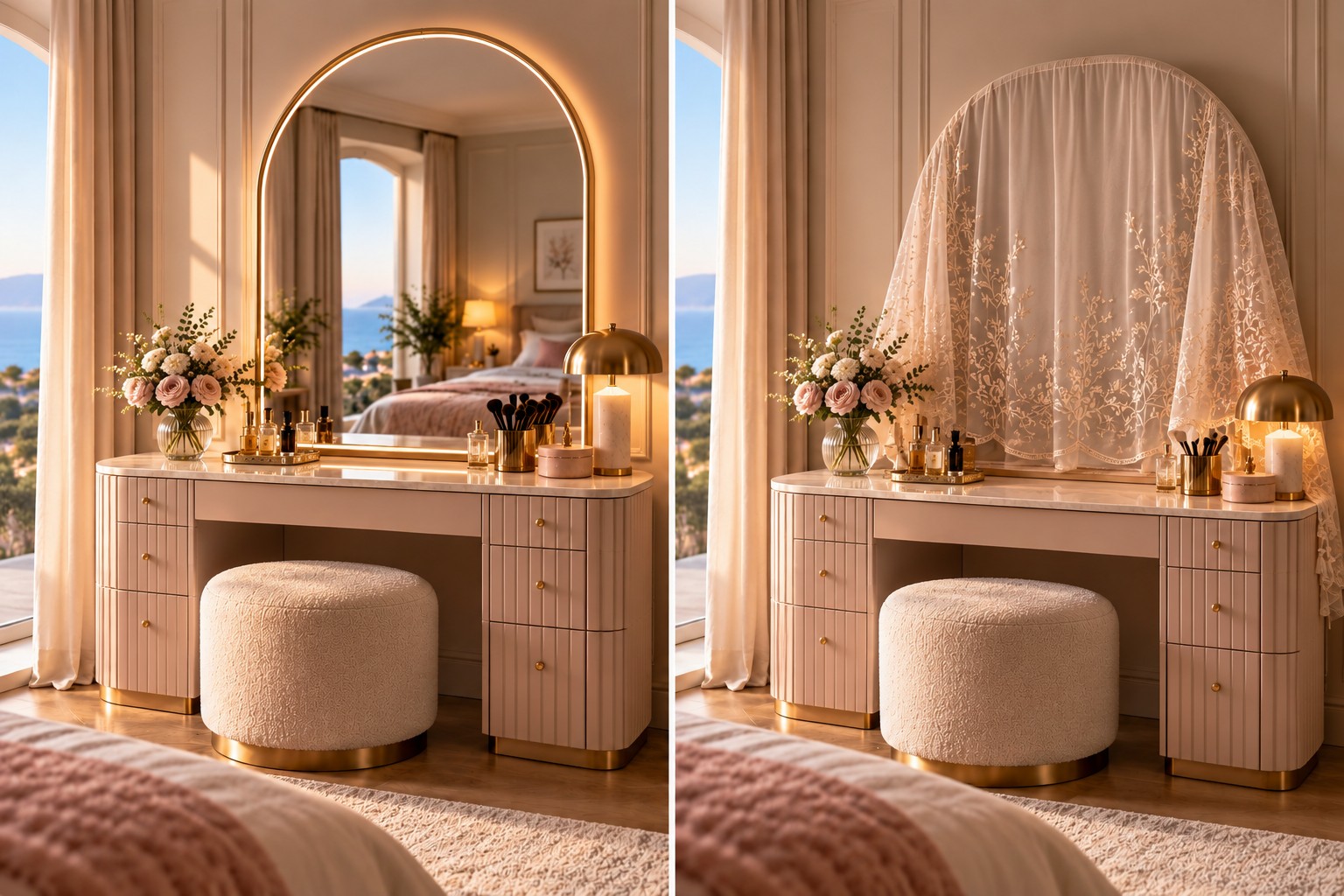
If you use a dressing table, one of the most elegant solutions is a model with a mirror that closes. The mirror opens when needed; when not in use, its doors are closed. In this way the dressing table keeps its function while the mirror does not constantly reflect the bed.
If using a dressing table with doors is not possible, there is a simpler and utterly elegant solution:
Covering the mirror.
A beautiful fabric in keeping with the room's decoration can be chosen. A silk-look, linen, fine cotton or lightly textured decorative cloth can be draped over the mirror.
There is an important detail here.
Covering the mirror should not be thought of as something done only at night before going to bed.
If the mirror faces the bed and you wish to follow the Feng Shui approach, the mirror can be kept closed or covered whenever it is not in use. In this way, the mirror is prevented from constantly reflecting the bed during the day, even when the bed is empty.
The more lasting solution is to change the mirror's angle or move it to another wall from which the bed cannot be seen at all.
The aim is not to fear the mirror or to banish it from the home.
The aim is to choose consciously what the mirror reflects.
WHOSE STORY HANGS IN YOUR HOME?
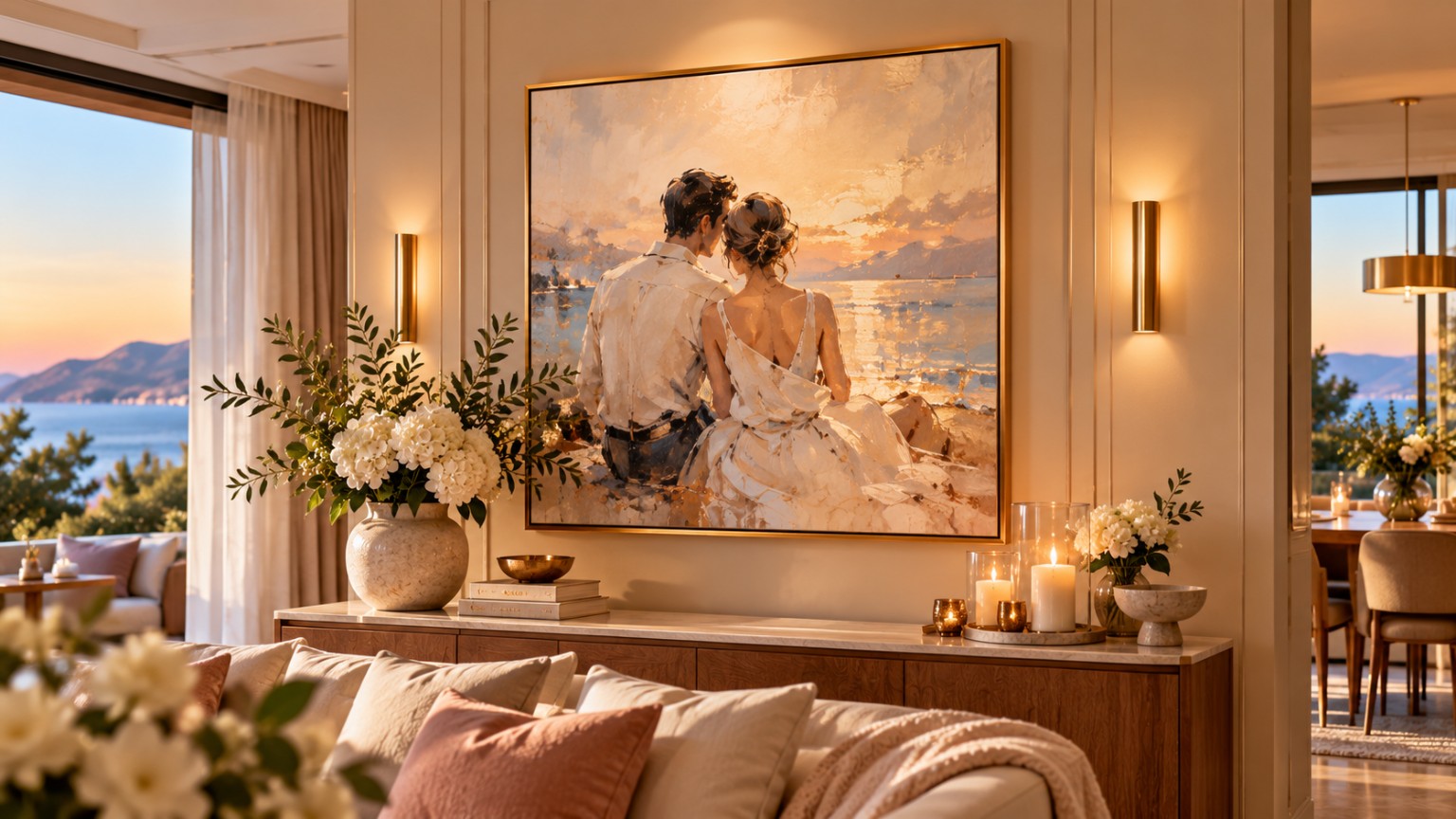
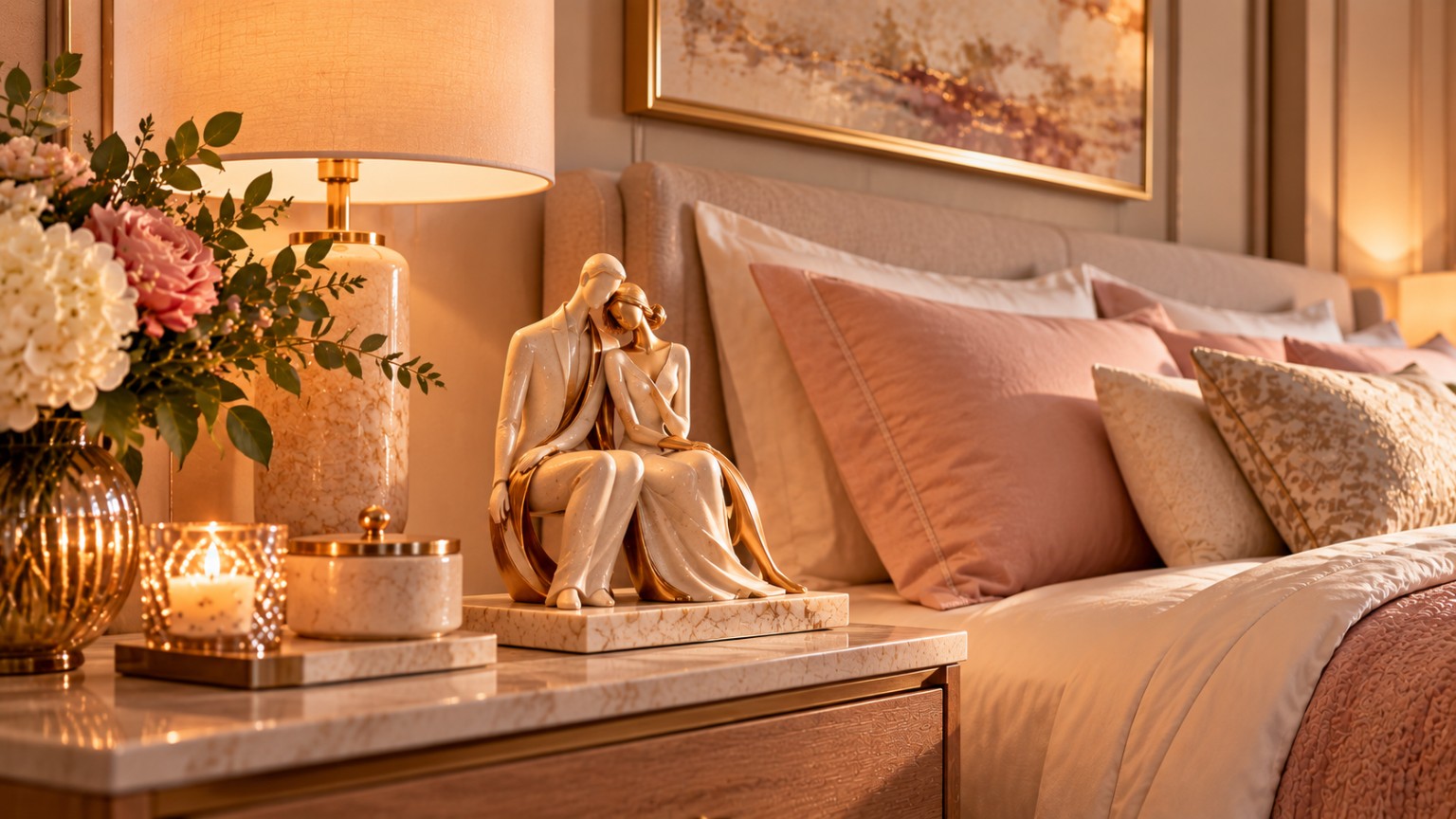
Take another look at the artworks on your walls, too.
A woman alone, gazing into the distance…
A man sitting by himself…
Two figures drifting apart…
In Feng Shui and in symbolic approaches to decoration, it is thought that images of solitude, repeated again and again, particularly in the spaces of a relationship, may be at odds with the sense of togetherness a person wishes to create in their home.
This does not mean that hanging a painting of a single woman on the wall will leave you alone.
The point is the symbol.
If you wish to strengthen the sense of togetherness and sharing in your home, you can also make room in your decoration for compositions that evoke couples, harmony and companionship.
Two harmonious objects.
Two figures turned towards each other.
Two plants growing together.
A quiet seating corner for two…
When choosing images, especially for the bedroom, ask yourself this:
Does this image speak of solitude, or of togetherness?
Your home can also tell the story of the life you wish to live.
IN THE BATHROOM, LESS IS BETTER
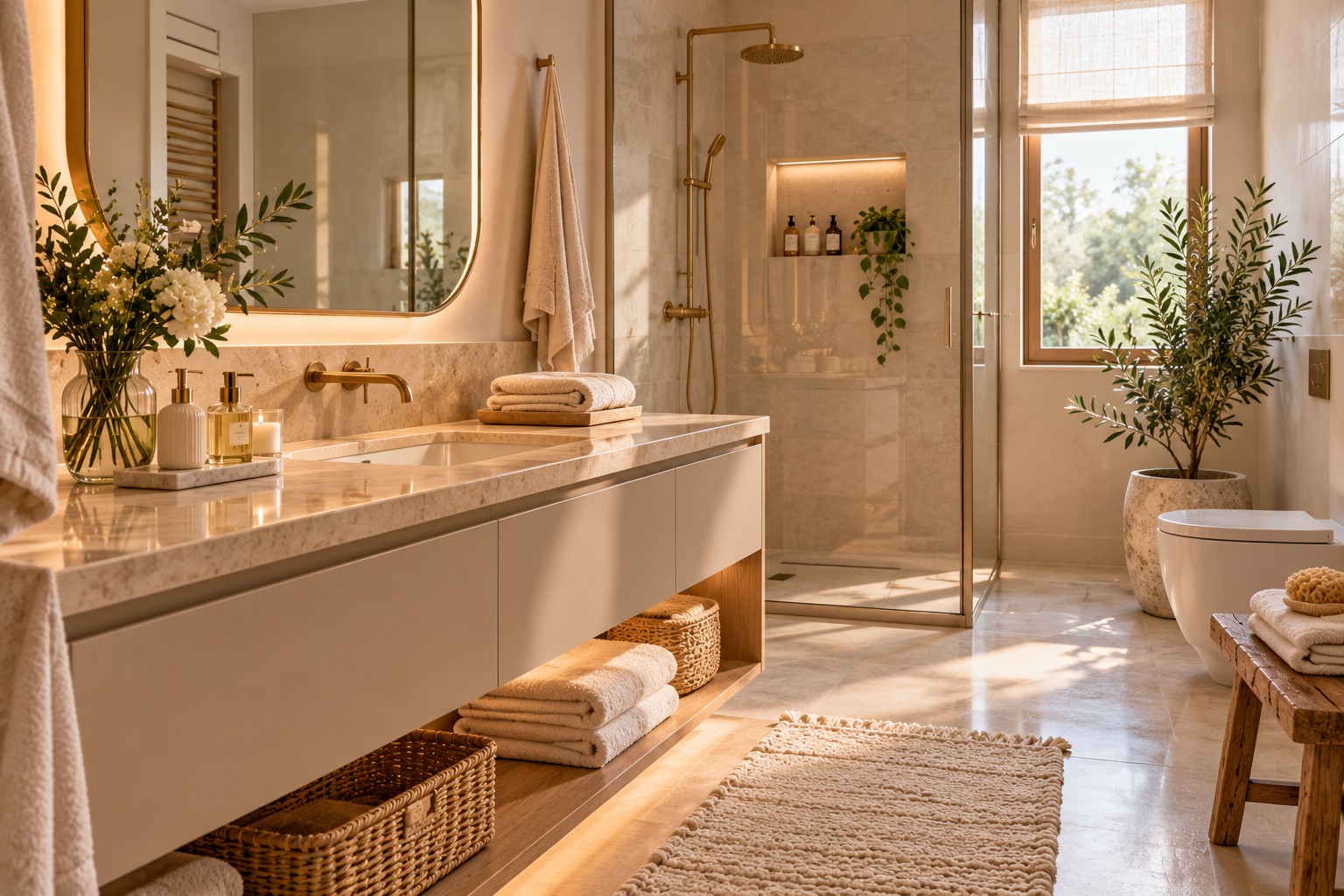
From a Feng Shui point of view, the bathroom is one of the spaces where the water element is already strong. So rather than filling it with more objects and decoration, keeping it clean, simple and orderly is a good place to start.
Do not let empty cosmetic packaging, unused products and needless bottles pile up on the counter.
Keep the towels clean and neat.
Keep the humidity under control.
Do not neglect the ventilation.
Have dripping taps and constantly running cisterns repaired. Quite apart from any reading of energy, this makes a real difference both to the home and to water consumption.
There is no universal Feng Shui rule, valid for everyone, that gold and yellow tones are strictly forbidden in the bathroom. Colour choices can vary according to the school being followed, the Bagua area of the home and the other elements.
So rather than banning gold from the bathroom altogether, it is a wiser approach to use it without excess, within a calm and balanced palette.
LET IN THE LIGHT AND THE AIR
When autumn arrives, daylight wanes.
So rather than leaving the curtains closed all day, let as much natural light into the home as you can.
Open the windows in the morning, even if only for a few minutes.
Notice the corners that remain dark.
Replace the bulbs that have gone out.
Clear the windowsills blocked by too many things.
While Feng Shui associates these with the flow of chi, in terms of daily life they also create a brighter, airier and more orderly home.
THE AUTUMN ENERGY RESET
Set aside a day not to change your home, but to see it anew.
Start from the front door.
Open the door and look at your home as if arriving for the first time.
Put the entrance in order.
Set aside what is broken.
Mend what does not work.
Donate what you do not use.
Remove the dried-out plants.
Create a little space in the wardrobes and drawers.
Look at what the mirrors reflect.
Leave a beautiful, living image that evokes abundance opposite the mirror in the living room.
Reconsider the direction and surroundings of the water dispenser.
In the bedroom, check whether the mirror sees the bed.
Look again at objects and paintings that evoke solitude.
Simplify the bathroom.
Open the curtains.
Open the windows.
Let the autumn light and fresh air into your home.
Then stand in the middle of your home for a few minutes, doing nothing at all.
Because sometimes what a home needs is not a new object.
A little light.
A little air.
A little space.
And the ability to let go of the things we no longer need, to make room for a new season.