ZARİF MOVEMENT — OCTOBER 2026
Strong Body, Graceful Posture
Posture, Strength and Balance in 15 Minutes
Good posture is not simply a matter of drawing the shoulders back. The body’s ability to stand upright, relaxed and balanced depends on many muscle groups working together, from the back to the abdomen, from the hips to the legs.
Sitting for long stretches during the day, leaning towards a phone or computer and spending hours in the same position can affect the body’s natural alignment. The shoulders may round forward; the muscles around the back, the core and the hips may not be used actively enough.
So this October, Zarif Movement aims not only to help you “stand tall”, but to build a strong body that supports standing tall.
The short series we have put together supports shoulder and upper-back mobility while working the core, strengthens the hips and legs, and helps us train our balance.
And you don’t need a long workout to do it.
15 minutes. A few fundamental movements. A small but steady routine to reacquaint yourself with your whole body.
1. Wall Angel
Open the Shoulders, Wake Up the Back
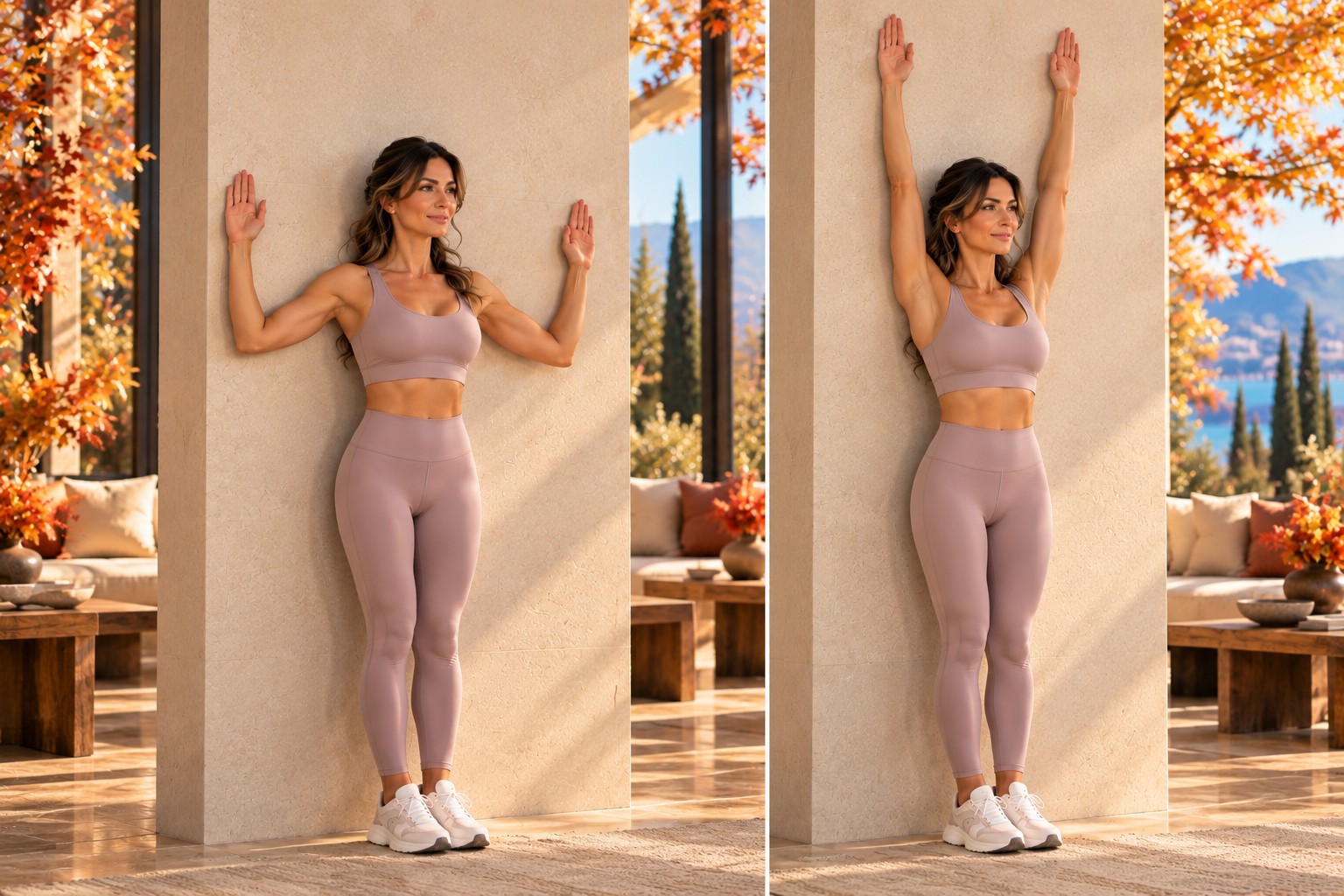
Stand with your back against a wall. Keep your head and back close to the wall, and place your feet wherever feels comfortable.
Open your arms out to the sides, elbows bent at roughly 90 degrees. With palms facing forward, slide your arms up the wall in a controlled way. Then return to the starting position with the same control.
8–10 controlled repetitions.
Don’t try to force your hands or elbows against the wall as you move. Stay within the range your shoulder mobility allows.
Moving without over-arching your lower back or flaring your ribs forward matters more than how high you can raise your arms.
Breath: Inhale calmly as your arms rise; exhale with control as you return to the start.
Most common mistake: Pulling the lower back away from the wall and pushing the ribcage forward to get the arms higher.
2. Squat to Reach
Strength Rising from the Legs
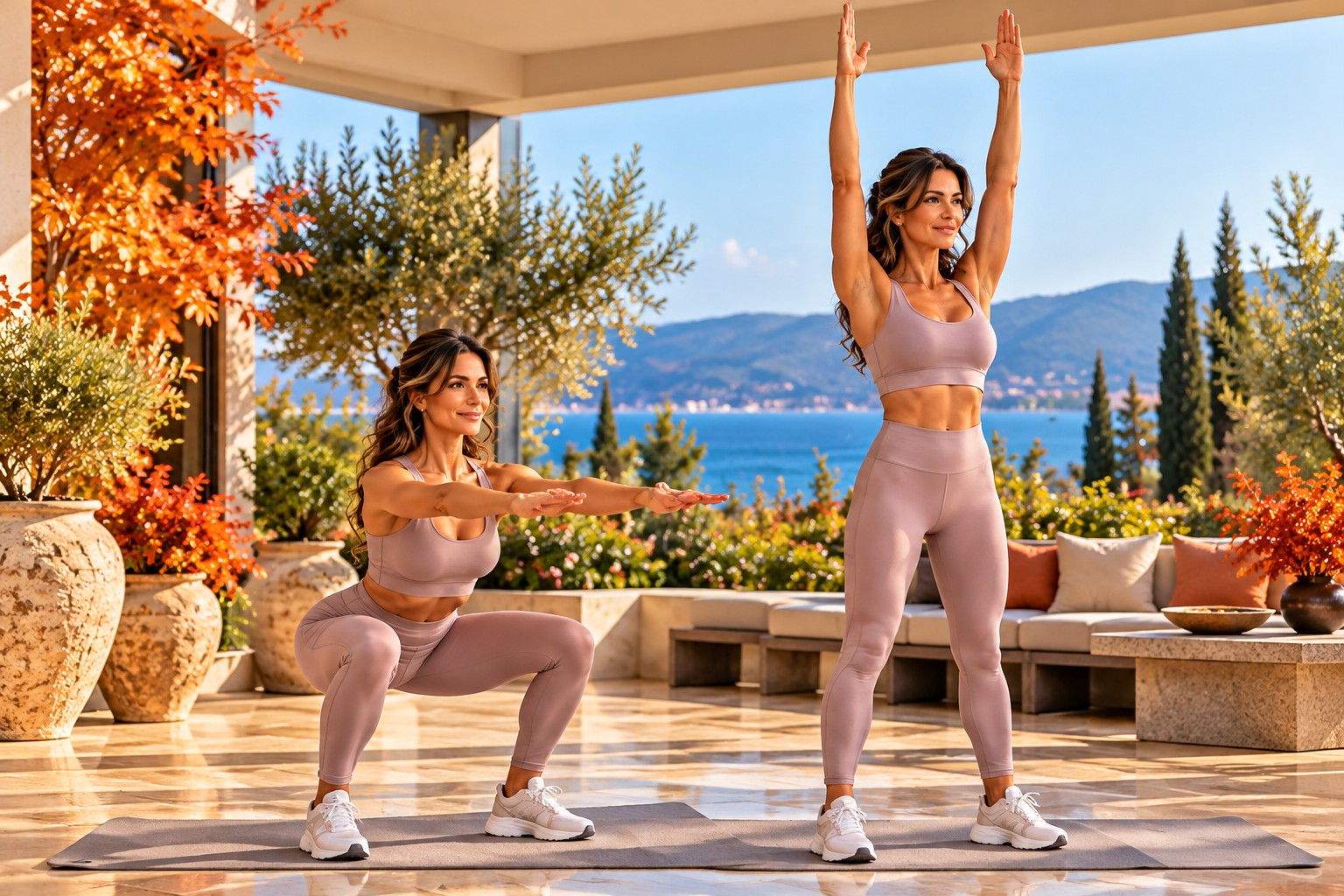
Set your feet at a comfortable squat width. Send your hips back and down to lower into a controlled squat. Reach your arms forward to keep your balance.
As you stand, actively engage your glutes and legs and, in one continuous movement, reach your arms up overhead.
10–12 repetitions.
Make sure your knees track in line with your feet. Depth varies from person to person; the aim is not to go as low as possible, but to move without losing control.
Breath: Inhale as you lower; exhale as you stand.
Most common mistake: Letting the knees cave inwards, or arching the lower back more than necessary as you reach up.
3. Standing Row
Open Shoulders, Strong Back
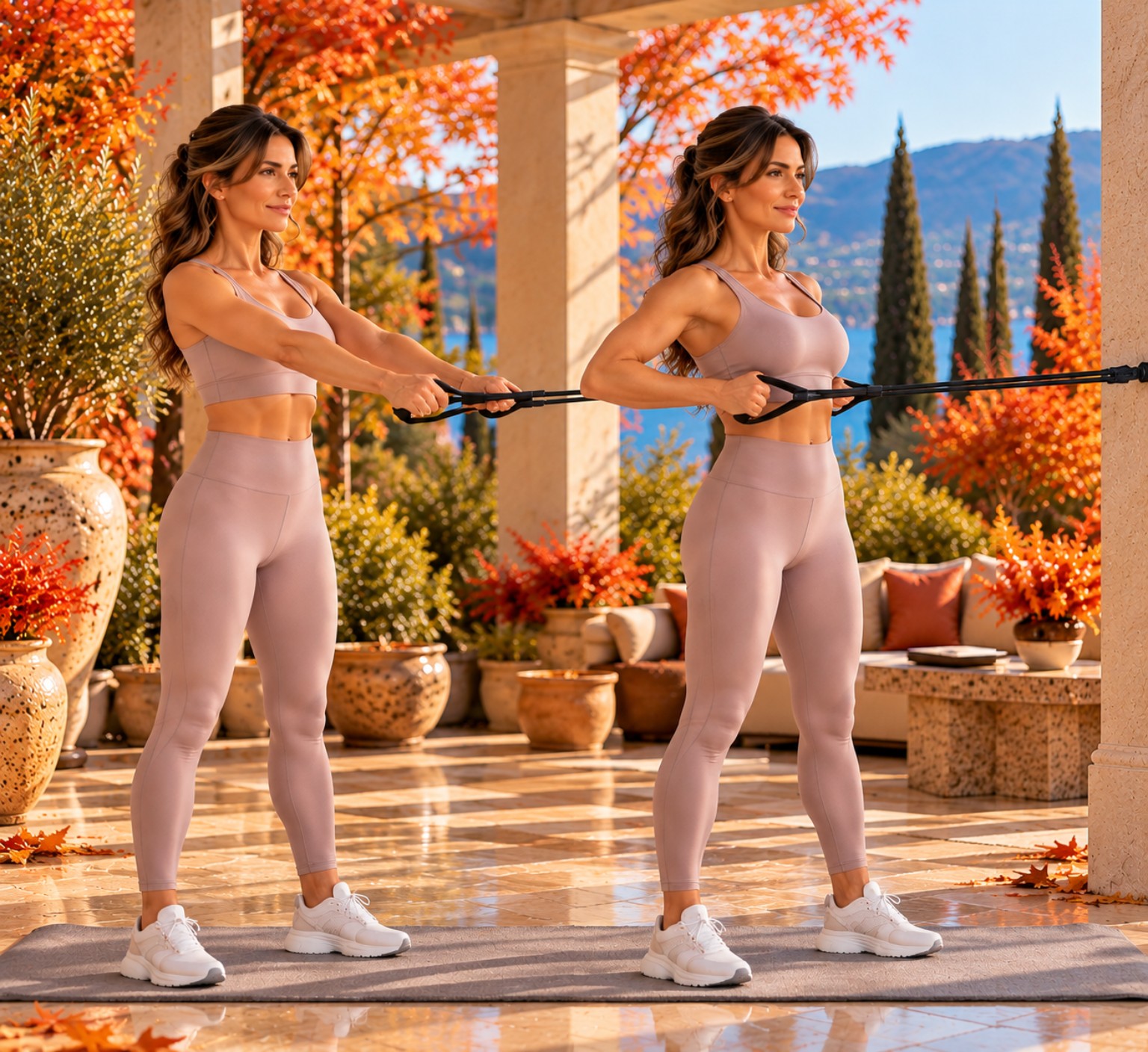
Anchor a resistance band to a sturdy, secure point.
Holding both ends of the band, step back a few paces to create light tension. Begin with your arms extended in front of you.
Keeping your torso upright, draw your elbows back. Feel your shoulder blades move towards each other. Then return to the starting position with control, without letting the band snap you forward.
10–12 repetitions.
Keep your shoulders down and relaxed rather than lifting them towards your ears.
Breath: Exhale as you pull the band towards you; inhale as you extend your arms again.
Most common mistake: Leaning the torso back to complete the movement. The torso should stay as still as possible; the work should come from the back and arms.
4. Bird Dog
Build Balance from the Centre
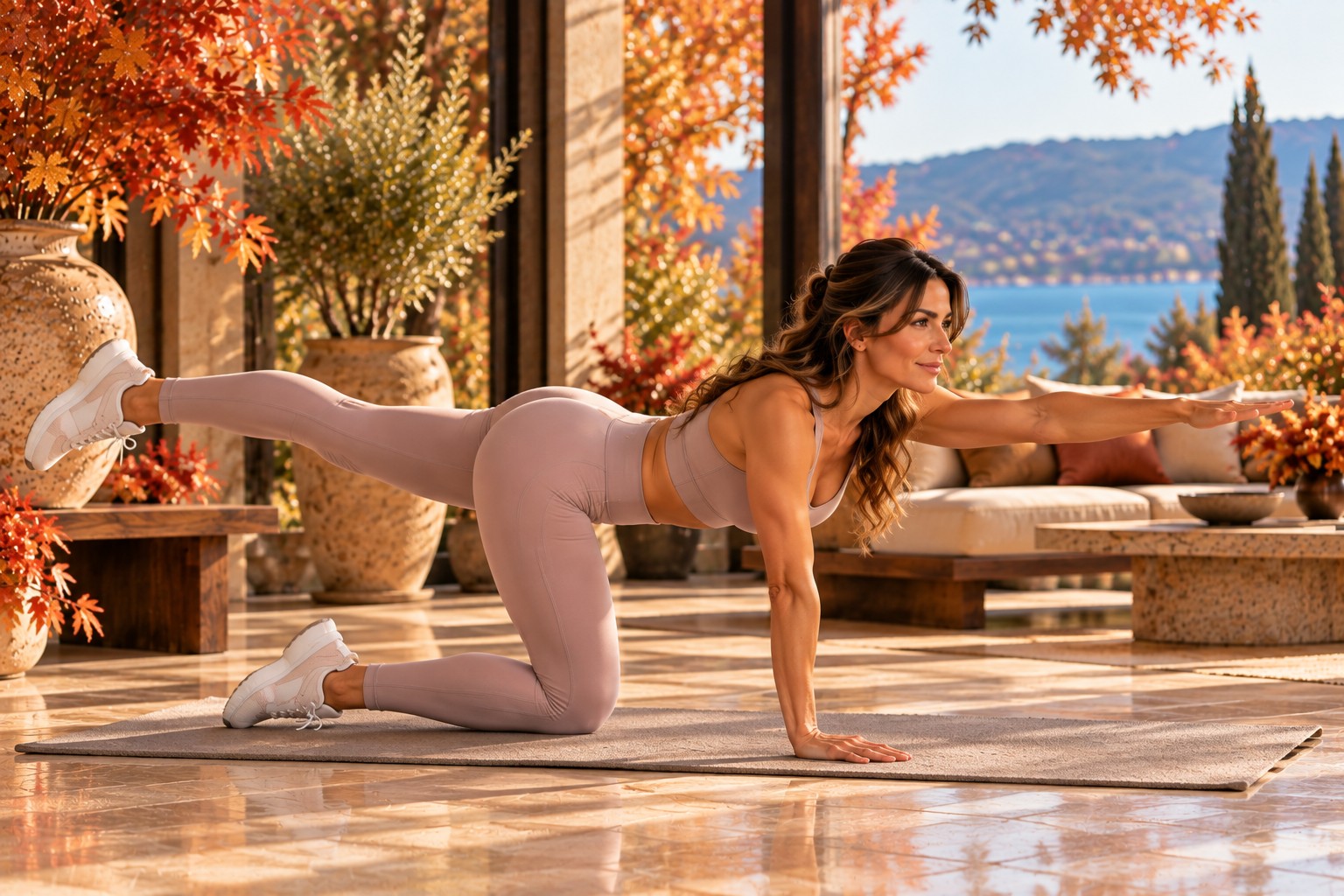
Come onto all fours, hands beneath your shoulders and knees beneath your hips.
Reach one arm forward while extending the opposite leg back. Hold the position briefly without letting your torso rotate to the side.
Bring the arm and leg back to the start with control, then continue on the other side.
6–8 repetitions per side.
The aim here is not to lift the arm or leg as high as possible. The real goal is to keep the torso balanced and controlled throughout the movement.
Breath: Exhale as you extend the arm and leg; inhale as you return to the start.
Most common mistake: Lifting the leg too high and arching the lower back, or letting the hip rotate out to the side.
5. Glute Bridge
Strengthen the Hips
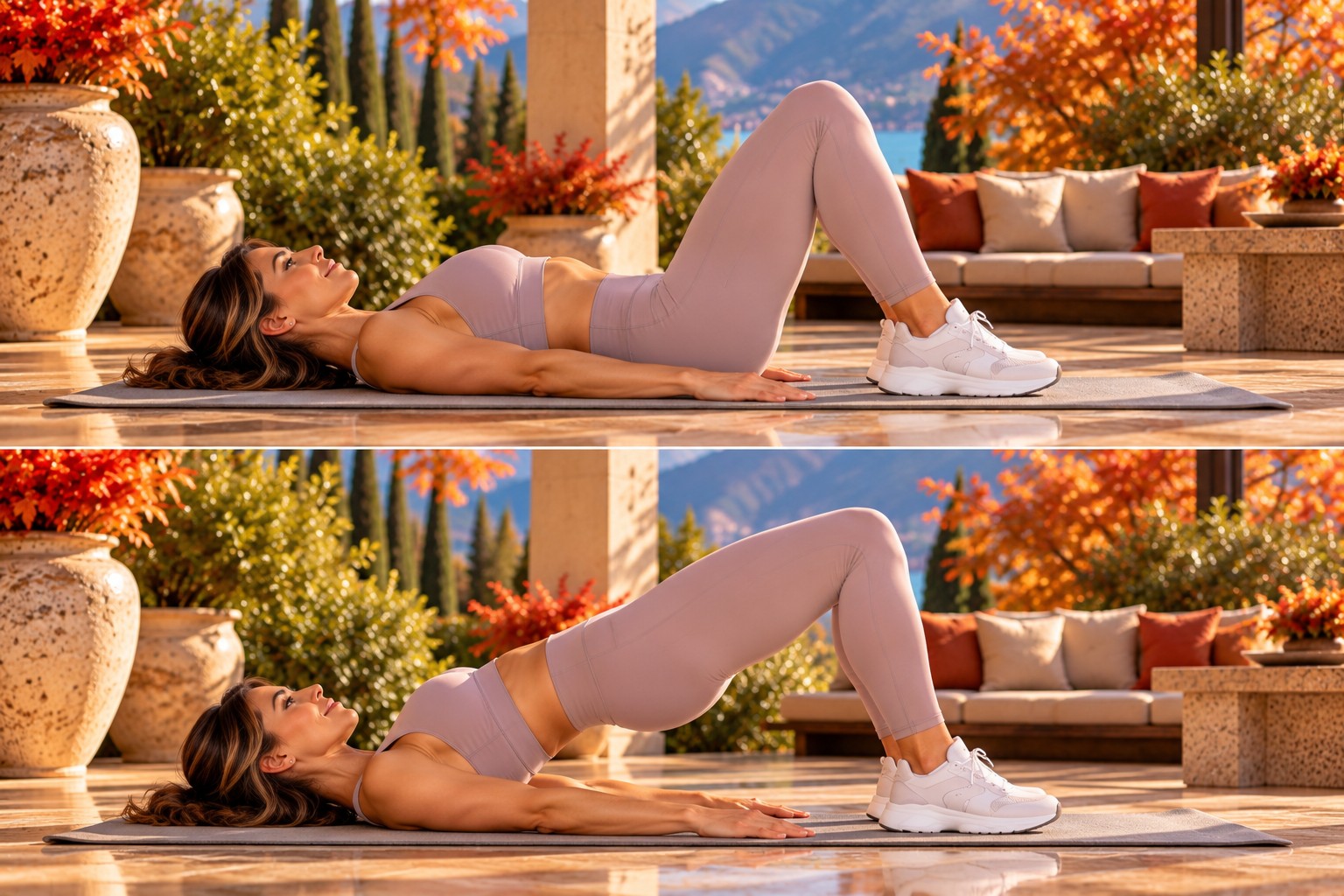
Lie on your back. Bend your knees and place your feet on the floor at a comfortable distance.
Keeping your core lightly engaged, lift your hips with control. At the top, feel your glutes working.
Then return to the starting position, controlling your spine and hips on the way down.
10–15 repetitions.
Controlled work from the glutes matters more than the height of the lift.
Breath: Exhale as you lift your hips; inhale as you lower.
Most common mistake: Lifting the hips too high and shifting the work into the lower back.
6. Dead Bug
A Quiet but Strong Core
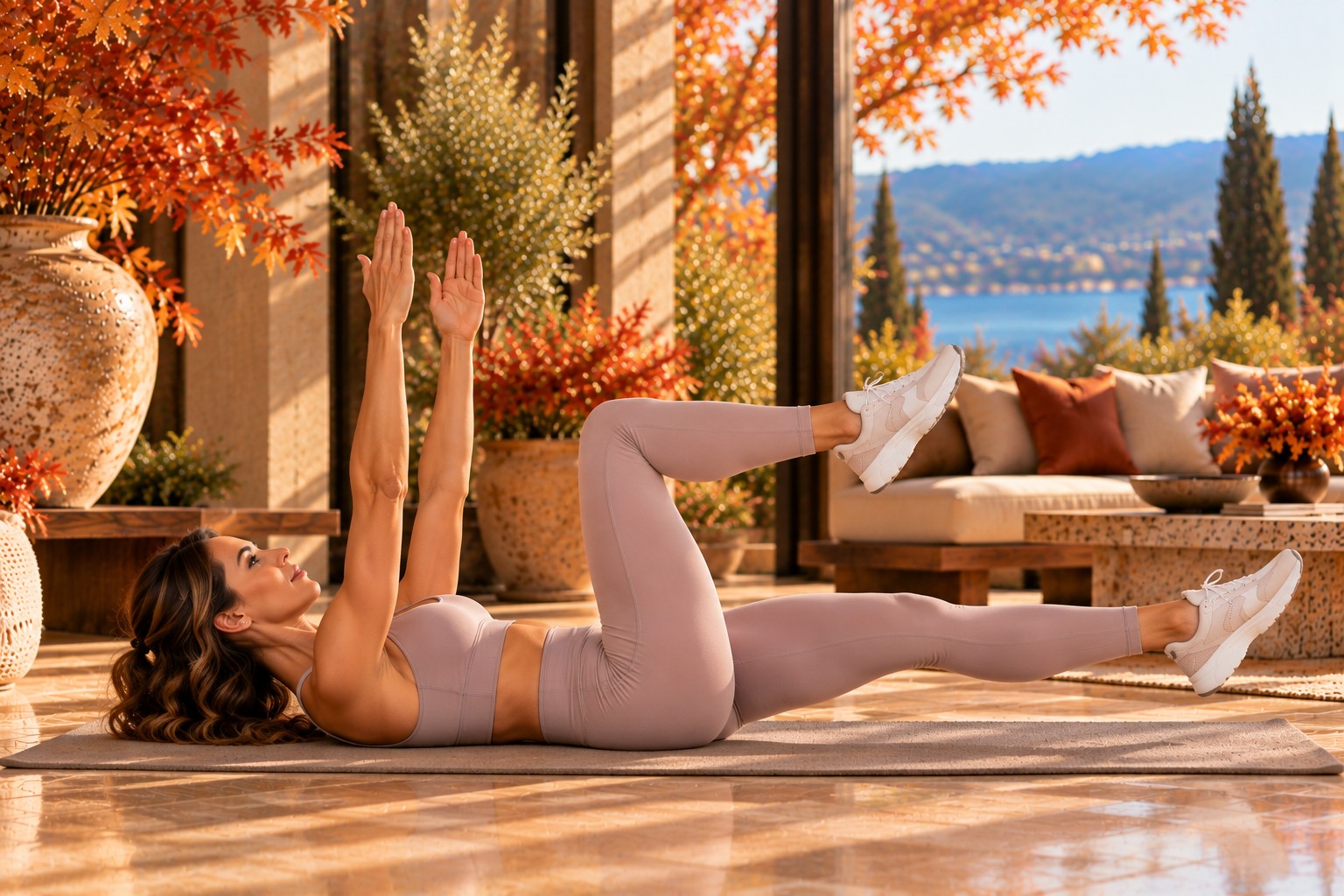
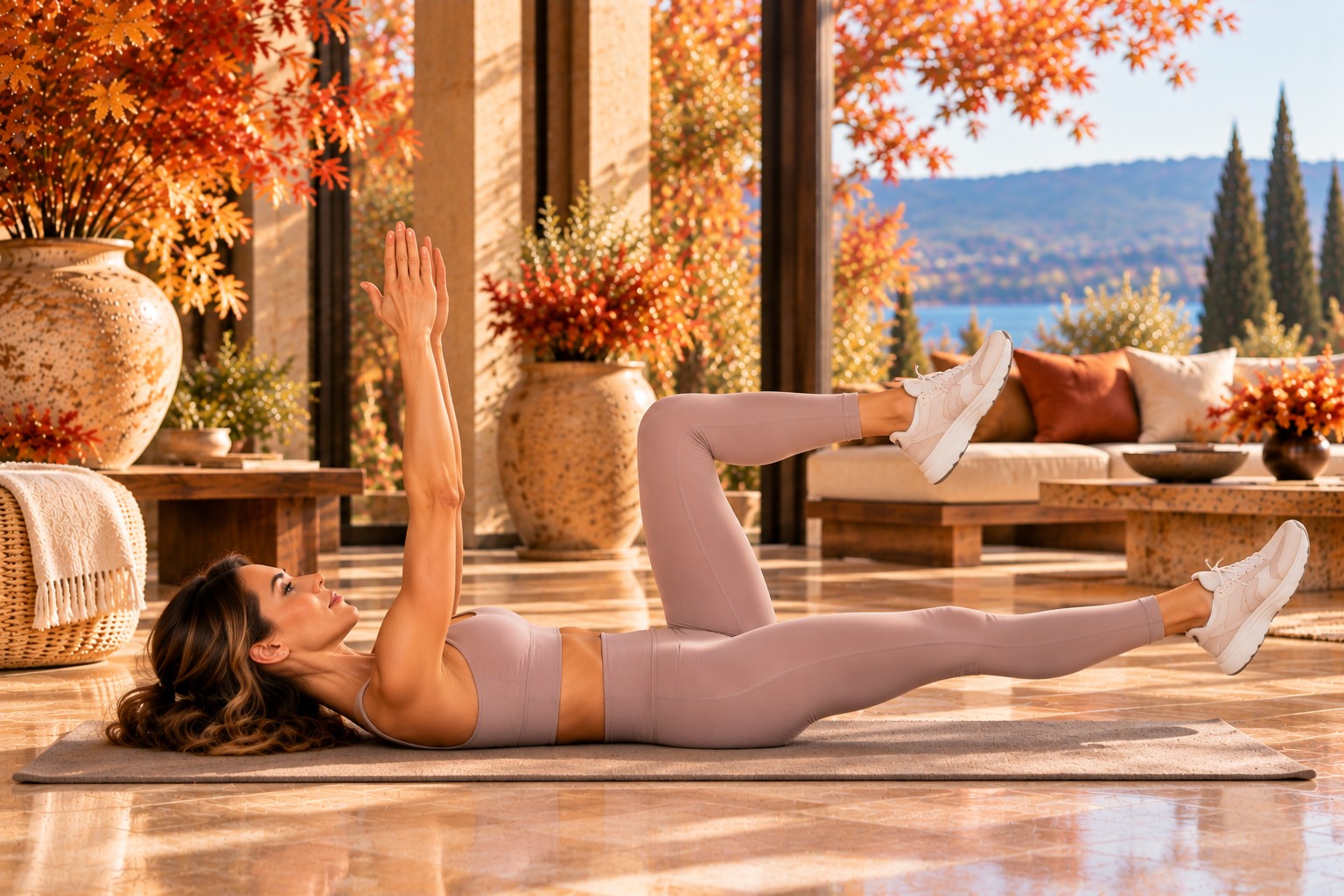
Lie on your back. Raise your arms towards the ceiling; bend your hips and knees to roughly 90 degrees.
Keeping your core controlled, slowly lower one arm back behind your head and the opposite leg towards the floor.
Return to the starting position and continue on the other side.
6–8 repetitions per side.
If your lower back starts to lift noticeably off the floor, reduce how far you extend the arm and leg.
In this exercise, control matters more than big movement.
Breath: Take a long exhale as you extend the arm and leg; inhale as you return to centre.
Most common mistake: Losing control of the lower back for the sake of a bigger range of movement.
7. Posture Bar
Open the Back, Remember Your Posture
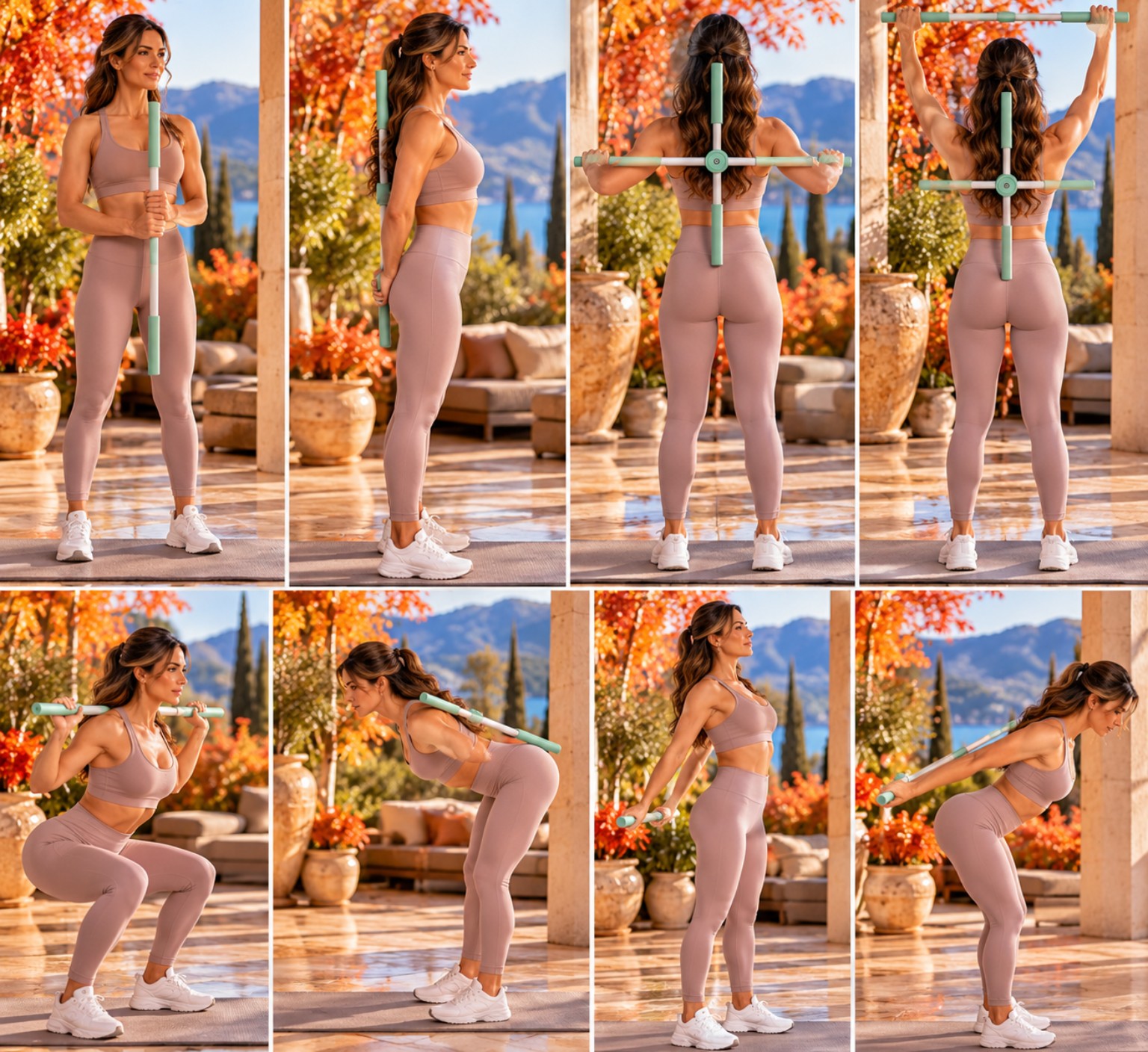
In posture work, a simple piece of supporting equipment can sometimes make it easier to notice the body’s alignment.
A posture stick or similar aid can be used to sense the position of the shoulders, shoulder blades and upper back more consciously.
Place the stick behind your back and hold it comfortably at both sides. Draw your shoulders away from your ears without forcing your chest forward. Keep your core lightly engaged and let your head rest as a natural extension of your spine.
To begin, you can hold this position calmly for 20–30 seconds.
Then, as far as your shoulder mobility allows, perform controlled opening movements with the stick.
6–8 slow repetitions.
Breath: Don’t hold your breath. Keep breathing calmly and naturally throughout the movement.
Most common mistake: Over-arching the lower back and pushing the ribcage too far forward in the effort to “stand up straight”.
The aim is not to create military rigidity.
The aim is to find a relaxed, natural alignment between the head, shoulders, torso and pelvis.
The 15-Minute Zarif Movement Routine
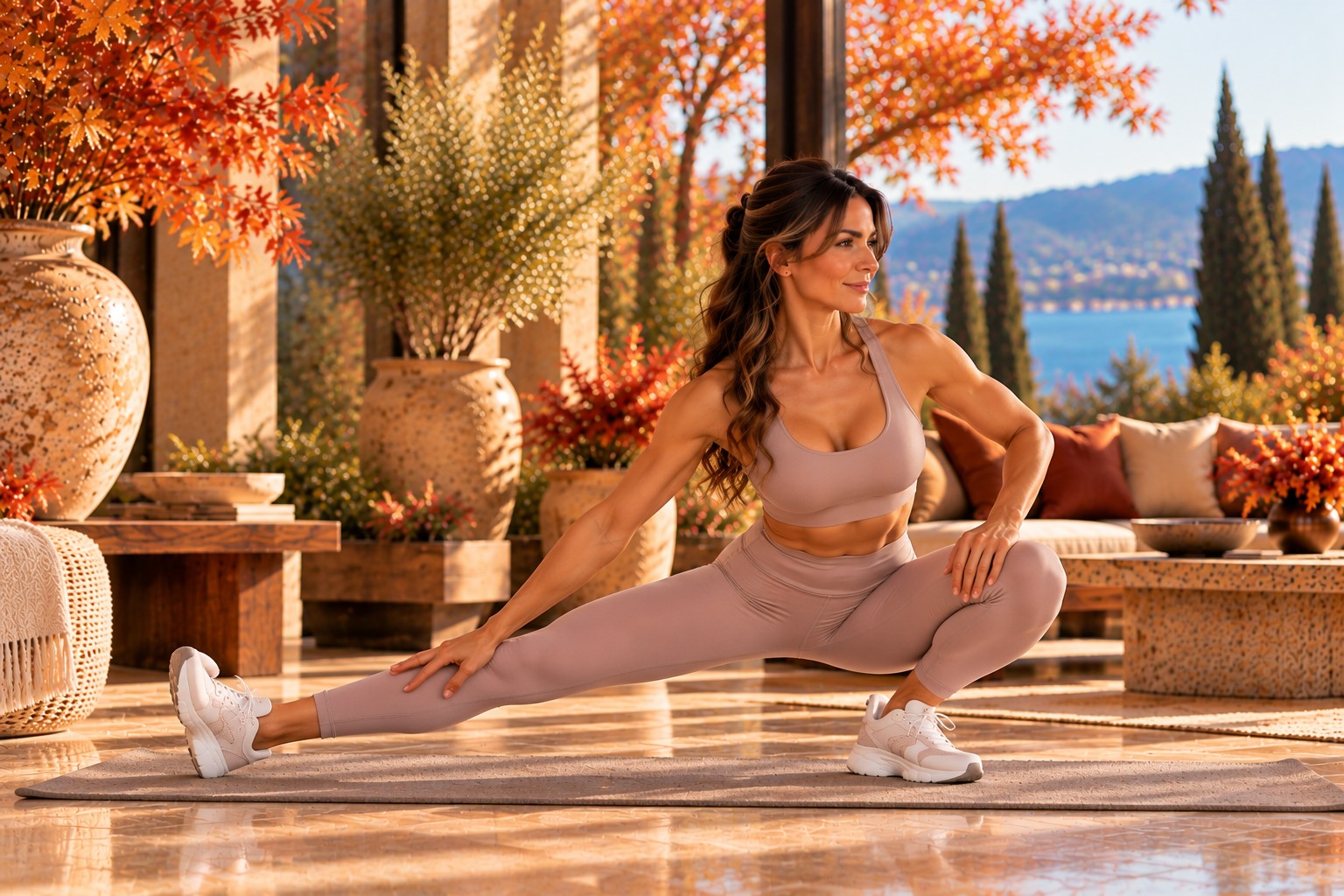
Before you begin, prepare your body with a few minutes of easy walking, shoulder rolls and gentle joint movements.
Then work through the movements in order. On the first round, focus on technique rather than speed. If you feel comfortable, you can repeat the series a second time.
Take short rests between movements when you need them.
The purpose of this routine is not to exhaust the body, but to work on movement quality, strength and body awareness together.
You don’t have to perform the same way every day. Some days two rounds will be enough, other days one. Steady, controlled movement is worth more than a programme rushed to the finish.
If you feel sharp pain, dizziness or any unusual discomfort, stop exercising. If you have an existing injury, joint problem or movement restriction, check with a health or exercise professional whether these exercises are right for you.
Remember Your Posture Through the Day, Too
Good posture is not just a position you hold while exercising.
How your body is positioned while you look at your phone, work at your computer, walk, carry something or sit for long periods matters too.
Every so often during the day, ask yourself three small questions:
Are my shoulders relaxed?
Is my head stacked over my body?
Can I breathe easily?
Sometimes what we need to realign the body is not a major correction, but a few seconds of awareness.