ZARİF TRAVEL
THE GRAPE HARVEST IN PROVENCE
An October escape among vineyards, stone villages and golden autumn light
Say Provence, and lavender fields and long summer days come to mind first.
Yet one of the region’s loveliest surprises is autumn.
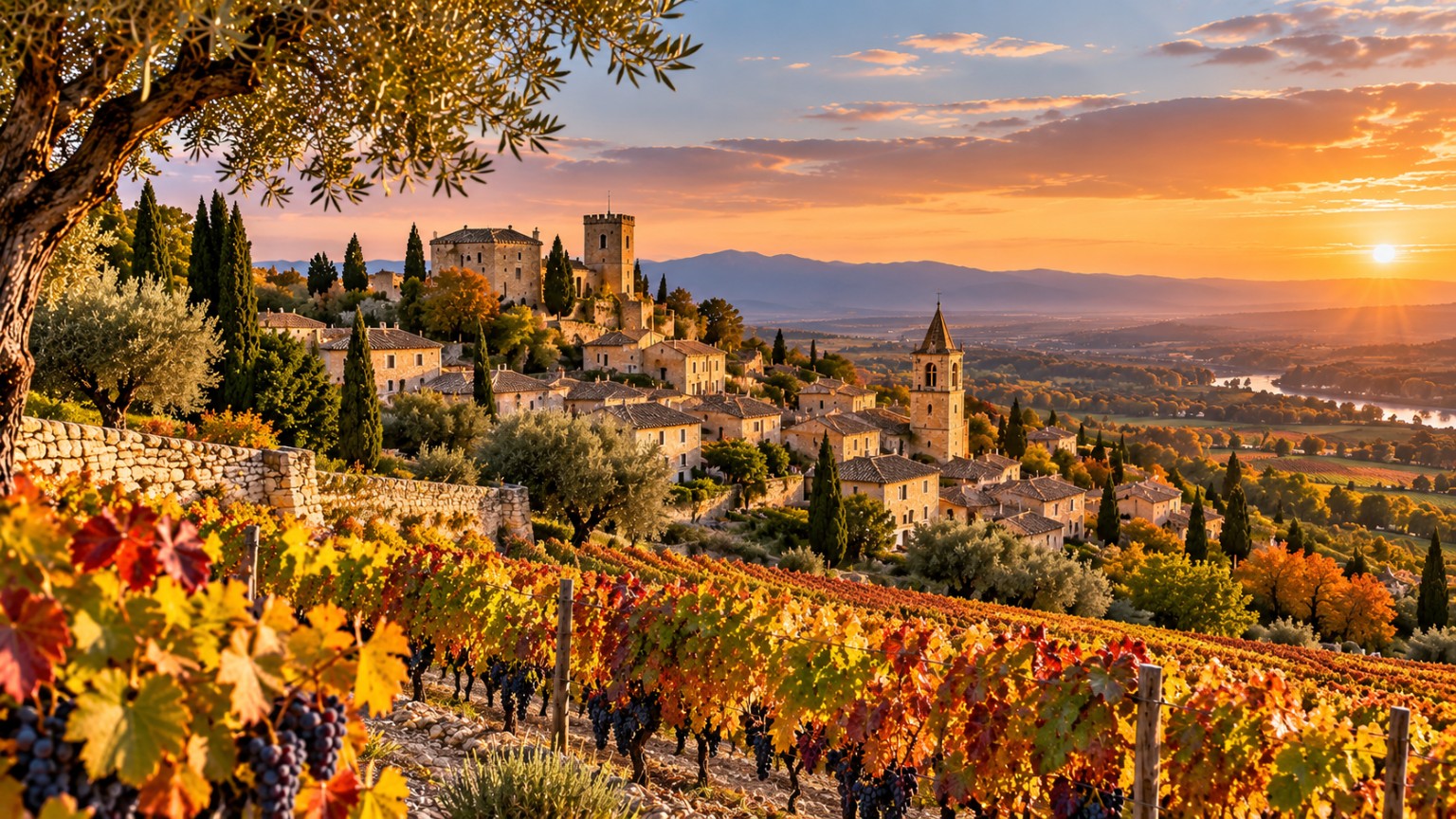
The summer crowds drift away, the sun softens, the mornings turn cool. As gold, russet and chestnut tones mingle with the green of the vineyards, the stone villages settle into a gentler rhythm. And these days bring with them one of Provence’s most important seasons, centuries in the making: the harvest.
This time, we are not touring all of Provence. We are curious not about how many stops a single journey can hold, but about how beautifully we can live one place.
Our destination: Châteauneuf-du-Pape, Vaucluse.
WHY OCTOBER?
Autumn changes the pace of Provence.
The bright, bustling picture of summer gives way to calmer days, softer light and vineyards beginning to turn. Hours spent outdoors are still an essential part of the journey, but now the cool of morning and evening makes itself felt.
Harvest dates shift every year with the weather, the grape variety and the position of the vineyard. In some vineyards the harvest may finish earlier. So anyone hoping to see the harvest, or to take part in a harvest experience, should confirm dates with the producer they plan to visit before travelling.
The beauty of an October journey is not in the harvest alone. Even once the harvest is over, the autumn colours of the vines, the work continuing in the cellars and the quieter life of the villages reveal another face of Provence.
FROM THE WORLD TO PROVENCE
There is no single way to reach Provence.
Marseille is one of the region’s principal gateways for international visitors. There are flights to Marseille from cities across Europe, and travellers from Türkiye can consider connections to Marseille via Istanbul.
For those coming from the United States, Canada, Asia or further afield, continuing via Paris is also a convenient option. From Paris you can take the high-speed train to Avignon and drive on from there to the wine country.
Travellers from London and Europe’s other major hubs can compare flights to Marseille with high-speed rail connections within France, depending on their travel dates.
For the final stretch, hiring a car gives you far more freedom to move between the vineyards and the country lanes.
Zarif Travel Note: Flight and train timetables may vary by season.
Check current schedules before booking.
A SINGLE STOP: CHÂTEAUNEUF-DU-PAPE
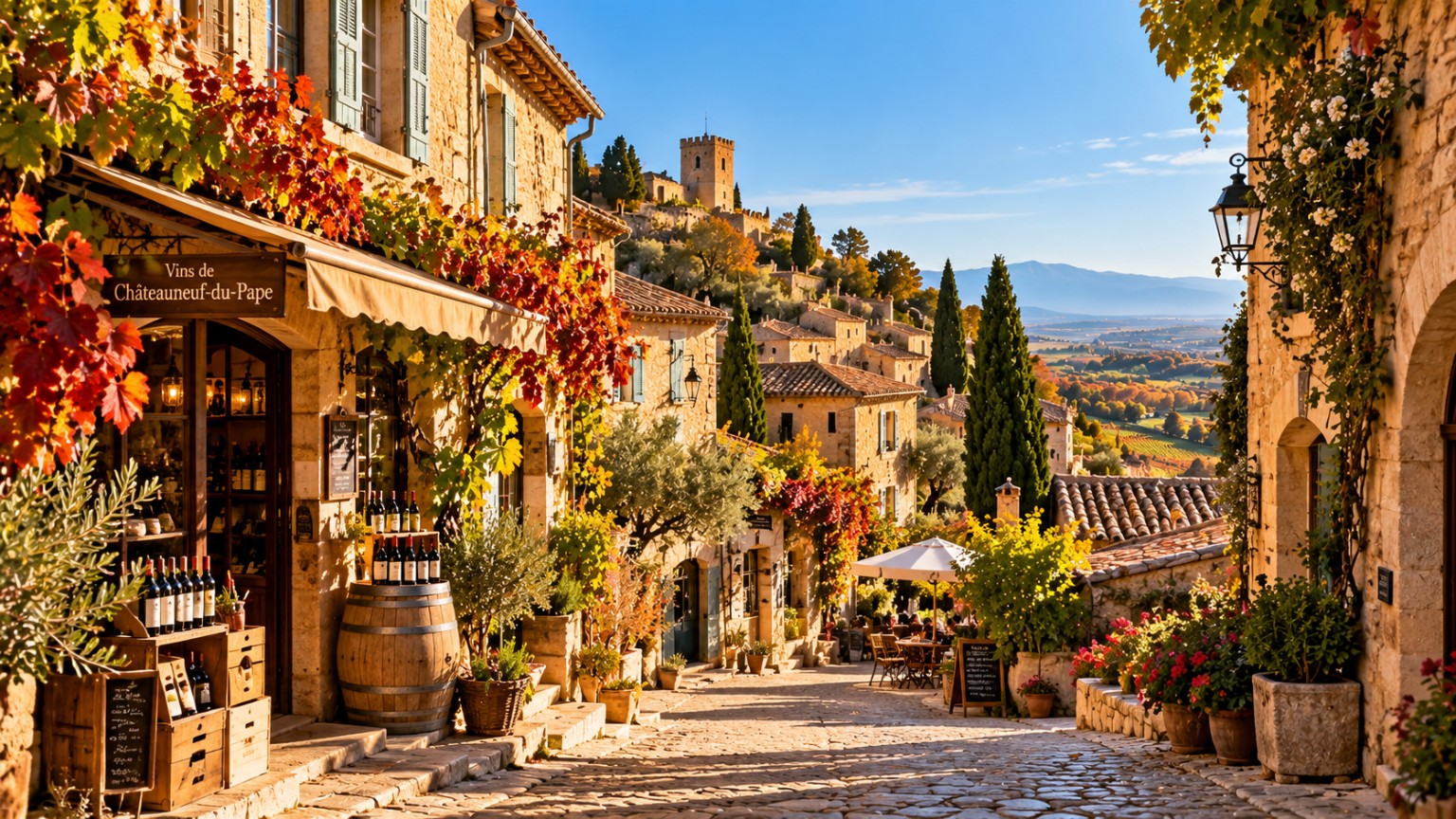
Rather than drawing up a list of things to do, here we slow down a little.
Walking the stone streets of Châteauneuf-du-Pape, seeing the vineyards that surround it, meeting small producers and watching the daylight shift across the vines are, in themselves, the journey.
The region’s wine culture is not a story that begins in the glass.
Soil, climate, grape, harvest, cellar and the know-how handed down through generations are all chapters of the same story.
Which is why the aim in coming here is not to reach as many places as possible.
To see a little less, and to live a little more.
INSIDE THE HARVEST
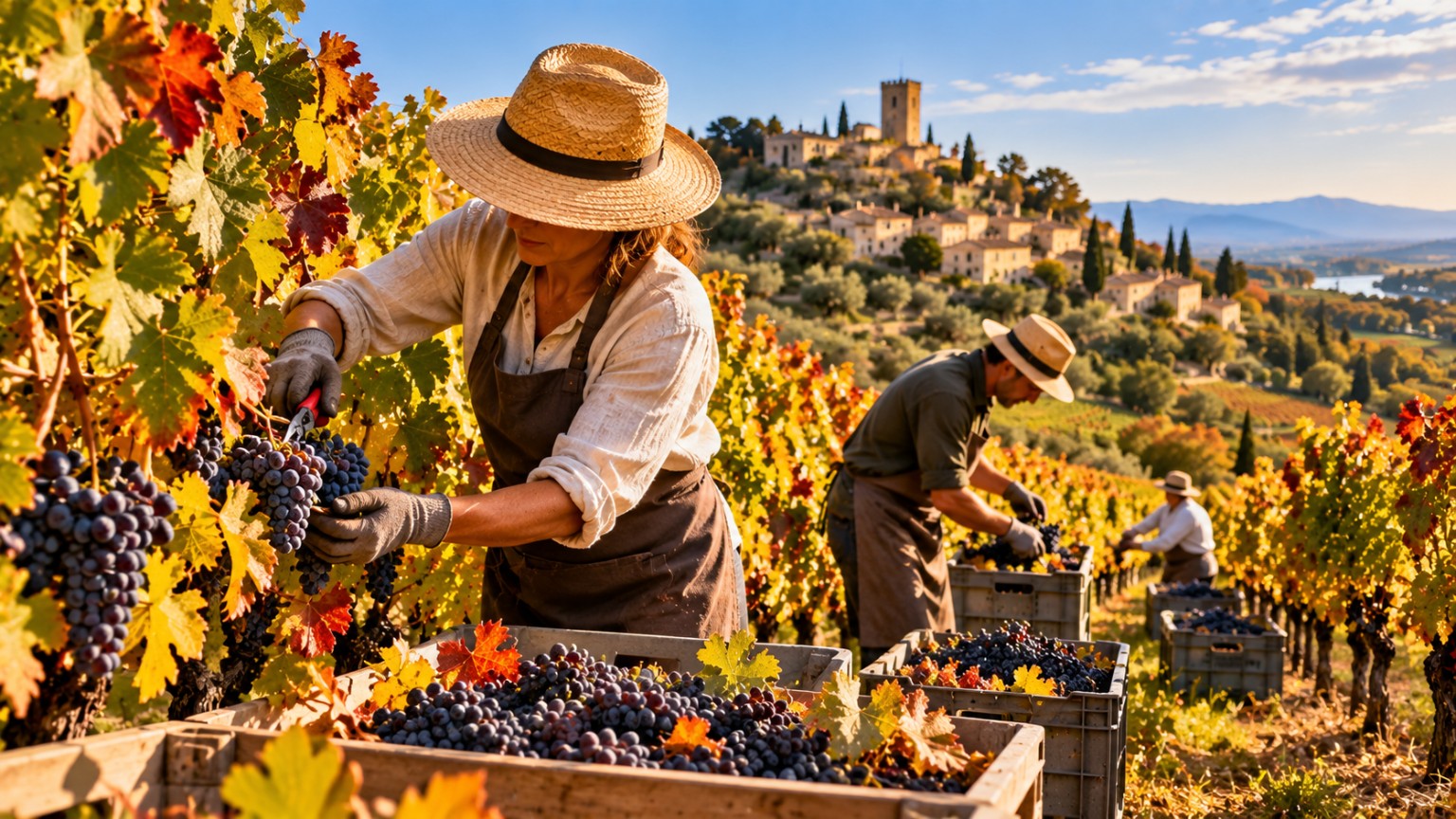
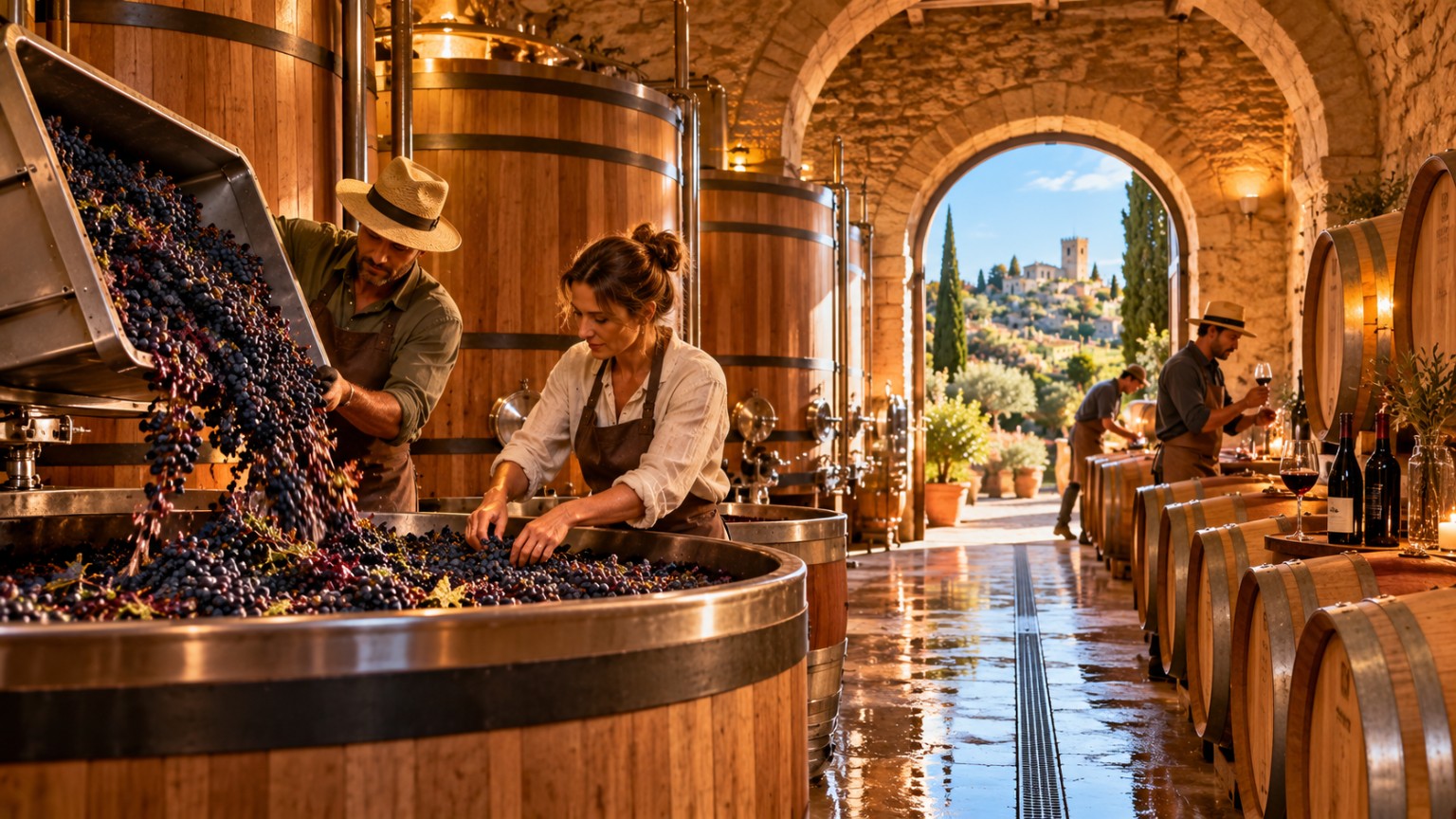
In the vineyards, the day begins early.
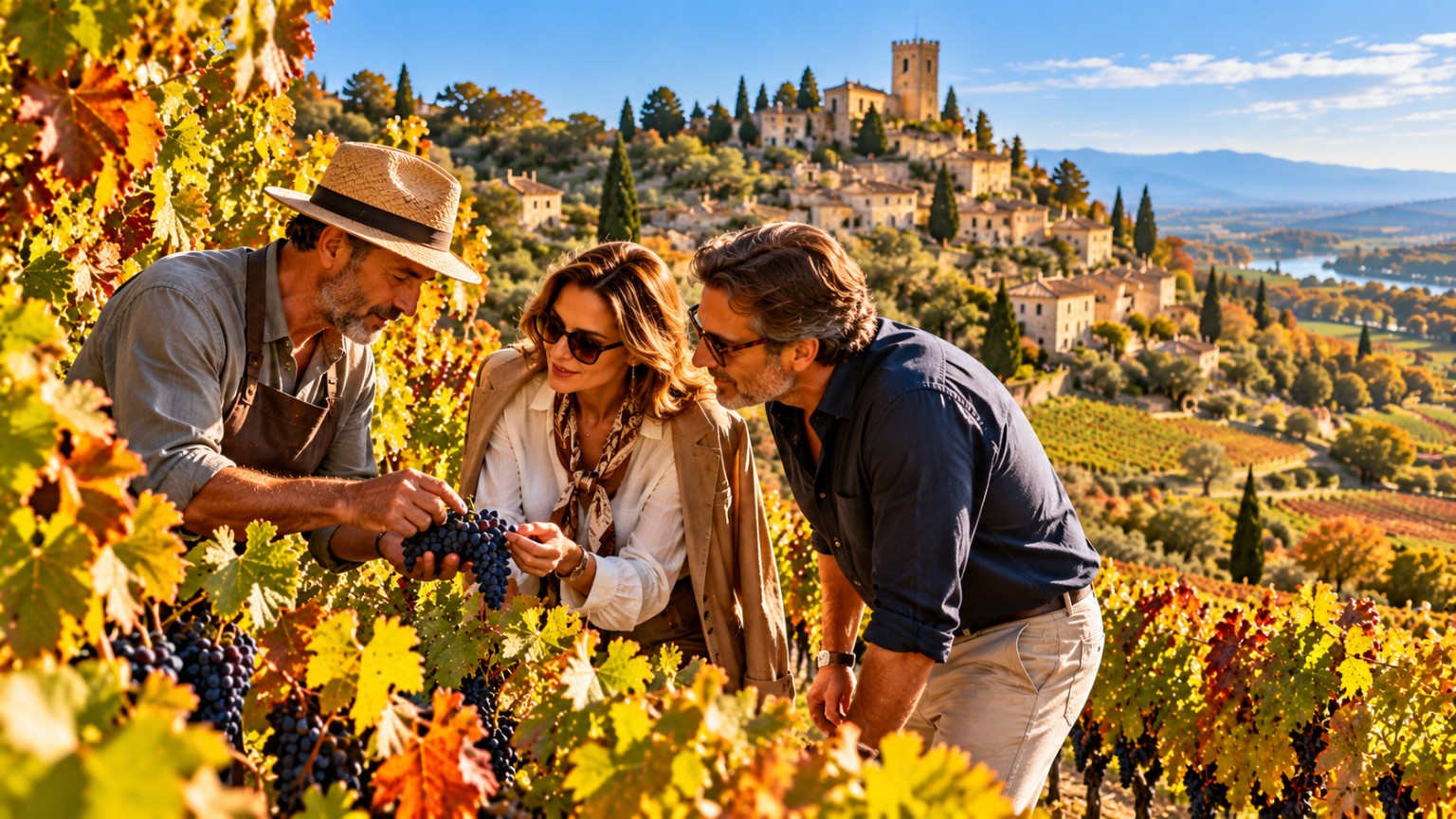
As morning light falls between the rows, harvest time has a movement all its own. Watching the grapes being picked, learning why one bunch is chosen over another, then following the grapes on their way to the cellar makes the region’s wine culture far more meaningful than simply tasting it.
On vineyard and cellar visits, listening to producers explain how the soil, the year’s weather and the timing of the harvest shape what ends up in the bottle lets you see Provence through different eyes.
During the harvest, some producers may host private visits, walks, gastronomic gatherings or tasting programmes.
For those who don’t drink wine, the vineyard experience is just as rewarding. Vineyard walks, viticulture, cellar culture, local gastronomy and the autumn landscape are reason enough for the journey.
Zarif Note: Book vineyard and cellar visits in advance. During the harvest, programmes may change according to the day’s work.
A DAY IN PROVENCE
Morning
Begin the day unhurried.
After a simple breakfast of fresh bread, butter, jam, seasonal fruit and coffee, set off towards the vineyards.
The morning is one of the loveliest times of day for walking. The light has not yet hardened, the air is cool and the vineyards are quiet.
Midday
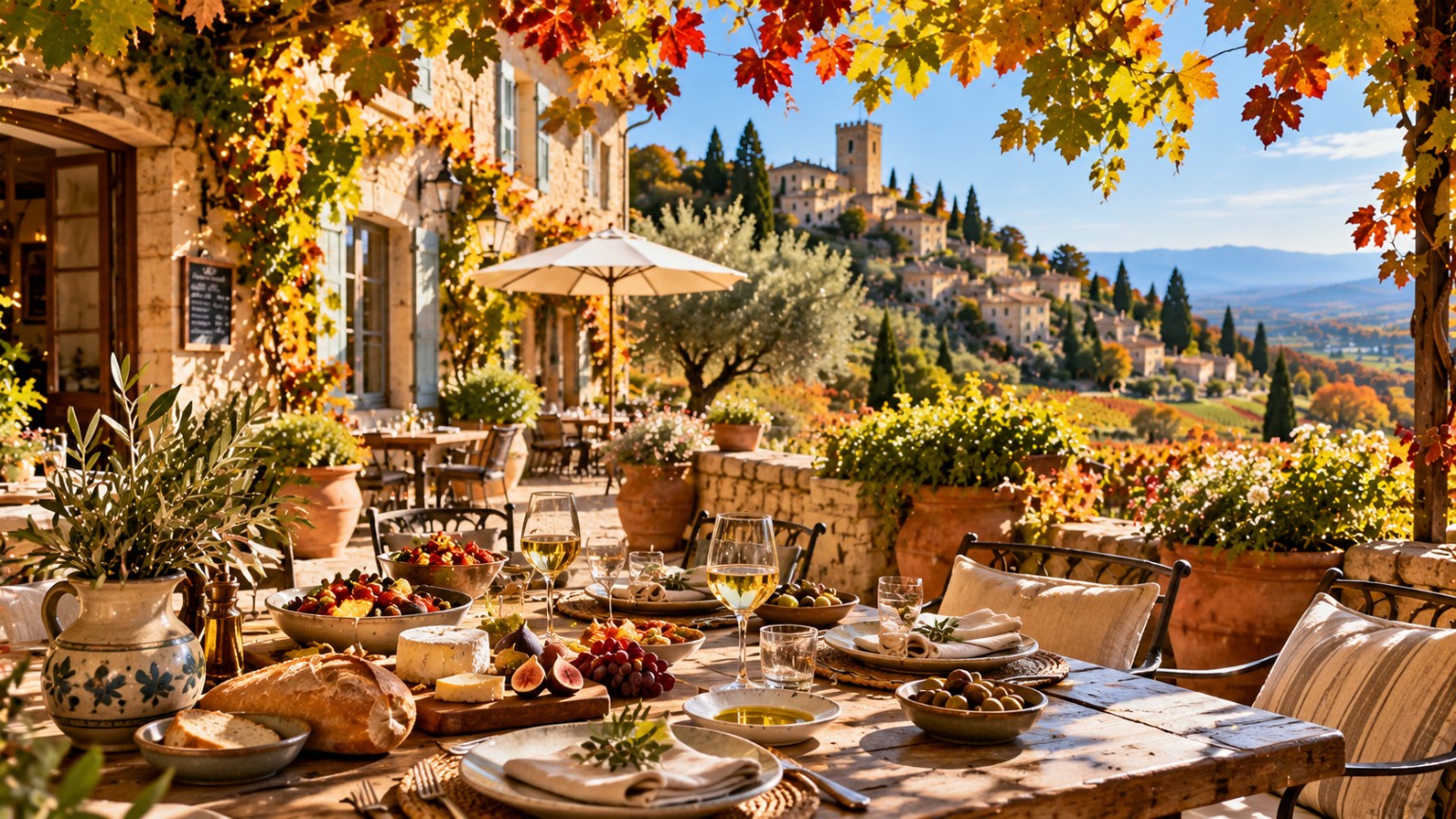
Make time for a long lunch.
A simple table of good bread, olive oil, cheeses, seasonal vegetables and the region’s local produce is more than enough to understand the gastronomy of Provence.
Here, lunch is not a gap between two plans.
It is the plan.
Afternoon
Stroll the stone streets of Châteauneuf-du-Pape. Step into small shops, discover local producers and, instead of hunting for new stops to fill the rest of your trip, savour the place you are in.
Golden Hour
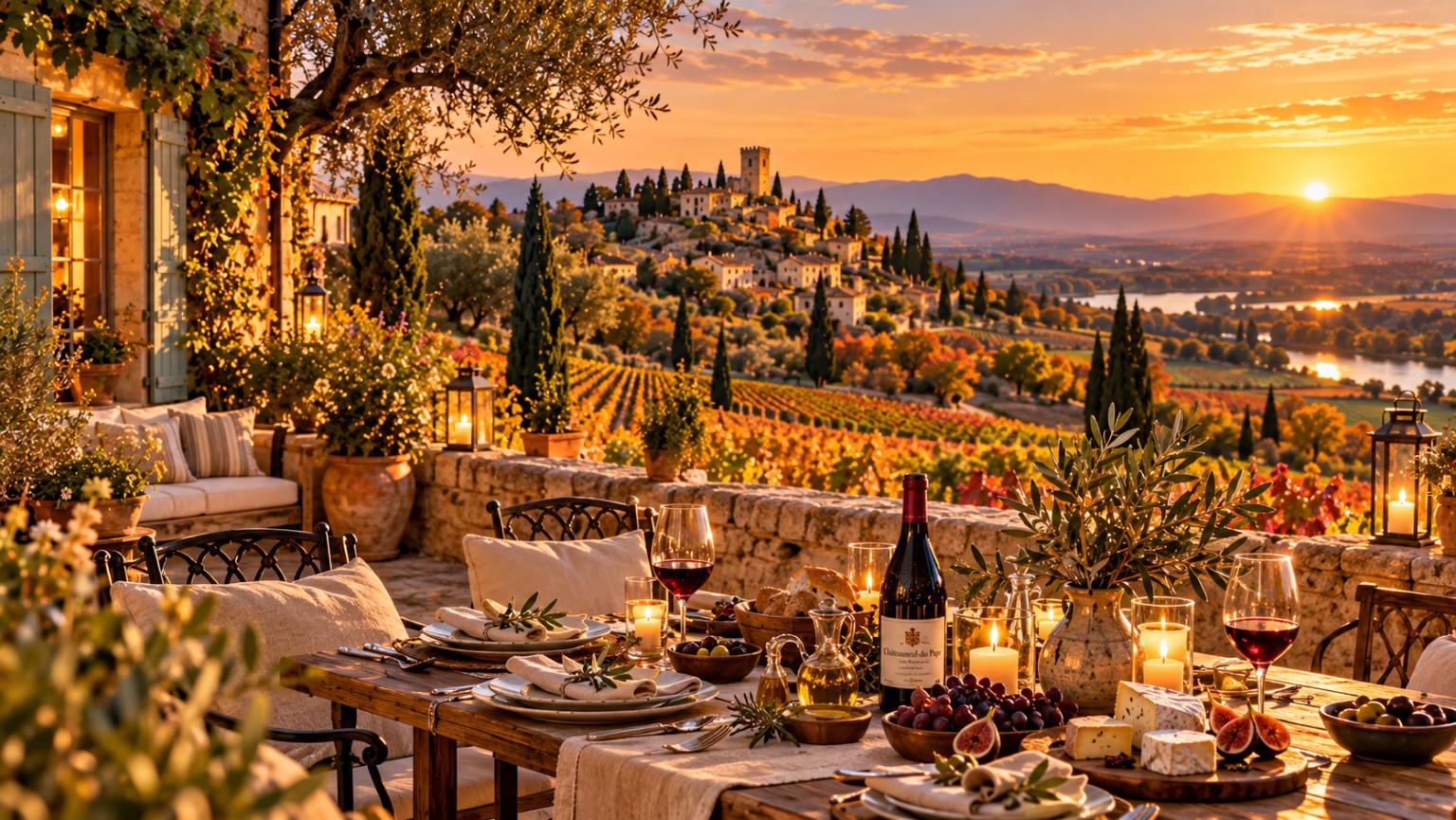
Give the last light of the day back to the vineyards.
In autumn, the lowering sun turns the rows of vines to gold and copper. Whether you want to take photographs or simply watch the view, doing nothing at all, it is one of the most beautiful hours of the day.
Evening
As the evening cool sets in, the pace of Provence shifts once more.
A day whose story began in the vineyards can close with a quiet dinner centred on local produce. A long evening spent without hurry may be remembered here far longer than any stop on a list of things to do.
WHAT TO EAT IN PROVENCE
The beauty of Provençal cooking often lies in its simplicity.
Good olive oil, olives, fresh bread, goat’s cheeses, seasonal vegetables, aromatic herbs, grapes and figs appear again and again on the autumn table.
Give a chance to the seasonal produce you find at the market or at small producers.
One of the loveliest ways to get to know a region is to see what is growing there that day.
WHAT TO BRING HOME FROM PROVENCE
Rather than filling your suitcase with souvenirs, take home a few good things.
A local olive oil, a small piece of ceramics, a beautiful linen table textile, regional honey or jam, or a traditional Provençal soap is enough to keep the journey with you.
The best keepsakes are often not the ones bearing the destination’s name, but the ones you truly use once you are home.
THE OCTOBER SUITCASE
In October, mornings and evenings in Provence can feel cool.
So building your suitcase around layering is a wise choice.
A light top layer you can take off and put back on through the day, and sturdy, comfortable shoes for walking easily through the vineyards, will be all you need.
On vineyard visits, mind the ground underfoot. Keep comfort alongside elegance.
Zarif Note: For outfits in tune with Provence’s October colours and style ideas for the change of season, turn to Fashion & Style in this issue — “Autumn’s New Colour Codes”.
3 NIGHTS / 4 DAYS — UNHURRIED PROVENCE
1. Day
Arrival, settling in, a first walk through Châteauneuf-du-Pape and the vineyards at sunset.
2. Day
A morning vineyard and cellar visit, a harvest experience if possible; then a long Provençal lunch and a quiet afternoon.
3. Day
Village life, local producers, small shops and gastronomy. In the final hours of the day, a return to the vineyards.
4. Day
A slow breakfast, one last walk and the journey home.
BEFORE YOU GO
Base: Châteauneuf-du-Pape, Vaucluse, Provence
Suggested length: 3 nights / 4 days
When: October
Getting there: Via Marseille or Paris–Avignon
Getting around: A hire car makes moving through the countryside easier
Bookings: Plan vineyard and cellar visits in advance
Suitcase: Layers and comfortable walking shoes
Important: Harvest dates change every year with the weather.
THE LAST LIGHT IN PROVENCE
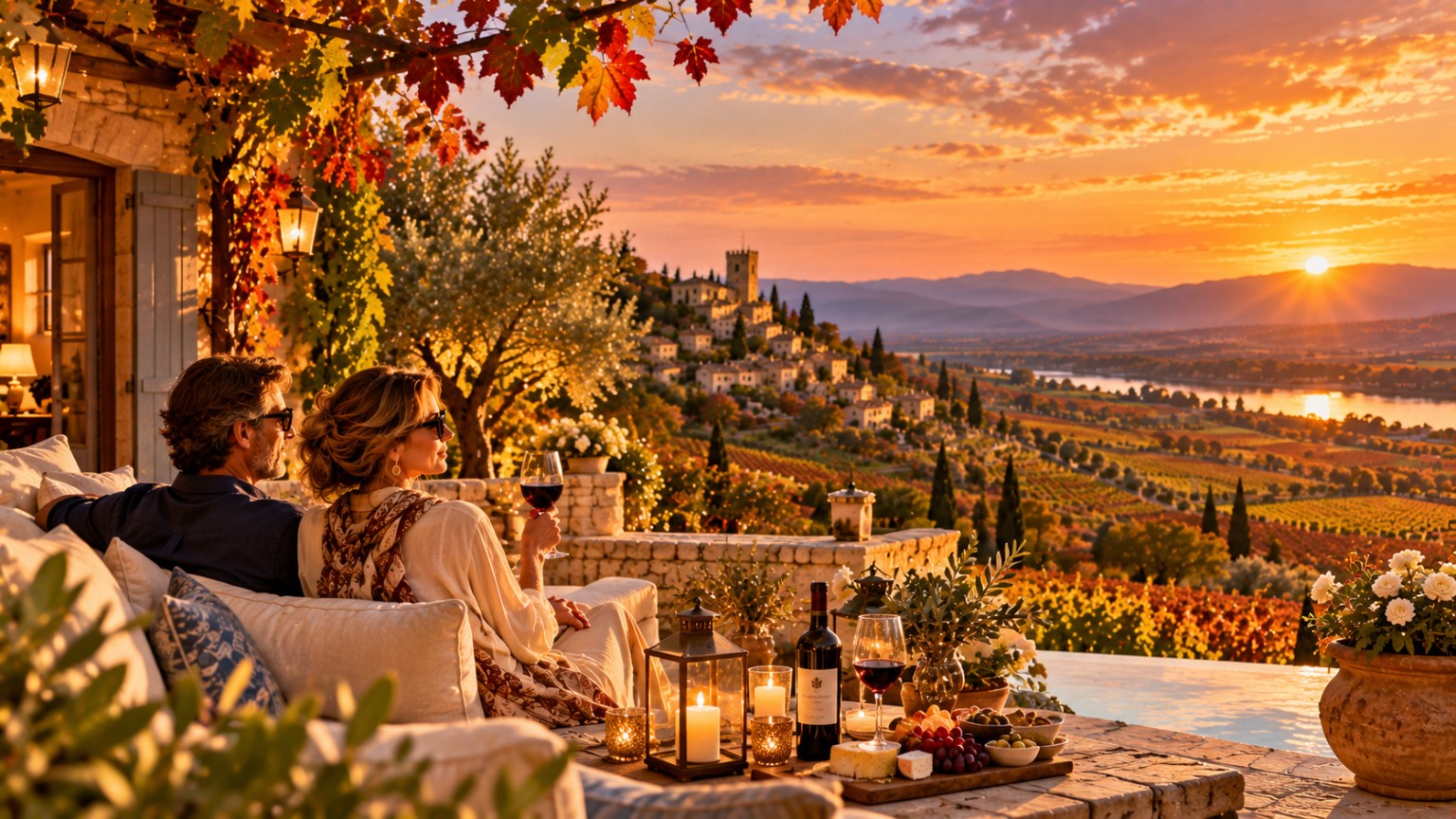
As evening falls, the last light lingering over the vineyards slowly withdraws.
The rows of vines we saw in the morning are now gold and copper. The stone walls release the warmth they have gathered all day, and the air begins to cool.
Perhaps this is the loveliest thing Provence teaches in autumn:
To truly go somewhere, you don’t always need to see more.
Sometimes a single village, a vineyard lane, a long lunch and a view remembered at sunset are enough for an entire journey.
Because some journeys are remembered not by how many places we saw, but by how long we stayed in one.