ZARİF TABLE
IN HOMAGE TO PROVENCE: A FAREWELL TABLE FOR THE LAST OF SUMMER
The colours of the grape harvest, the first coolness of October and a long autumn table gathered around a crackling fire
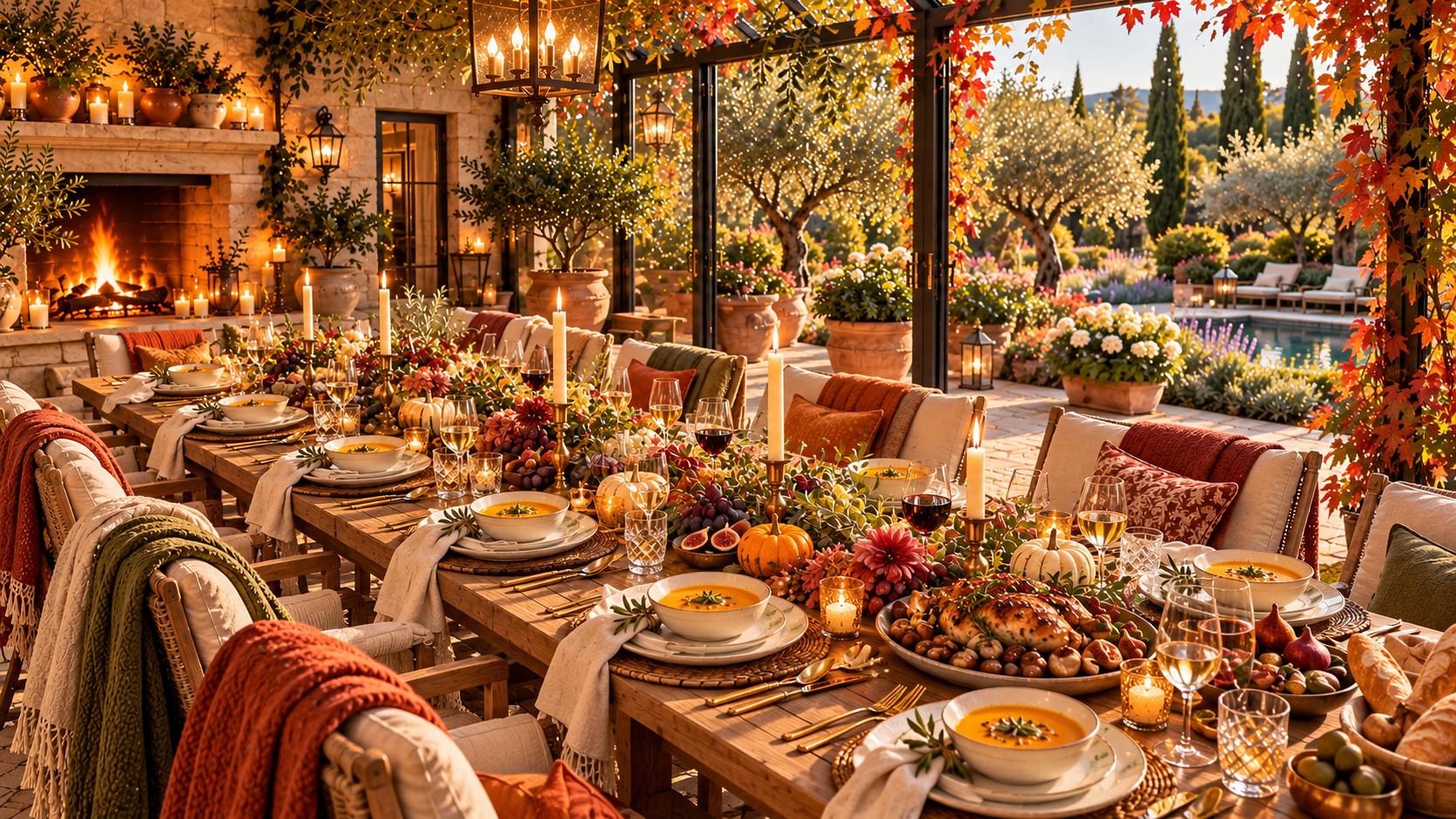
October is still too early to turn the table over to winter all at once.
There is still a little summer in the garden. The afternoon sun slips in through the windows, and light filtering through the olive branches falls across the table. But as the days begin to shorten, the air changes. The evening chill makes itself felt, a fine shawl left over the back of a chair is drawn around the shoulders, and the first fire is lit in the hearth.
This month, we set the Zarif Table precisely between these two seasons.
Our inspiration is Provence, which we visited in Zarif Travel, and the season of the grape harvest.
Yet rather than imitating a French table to the letter, we borrow the spirit of Provence: grapes from the vineyards, olive branches, figs, natural linens, warm ceramics, long meals and unhurried evenings…
And we bring all of it to the October table of Zarif Yaşam.
This time, the table is not round.
It is long.
Because some tables are laid not simply for eating, but for sharing.
BETWEEN GARDEN AND HOME
Our setting is neither entirely indoors nor entirely outdoors.
Picture a half-open, half-enclosed winter garden, with wide windows opening onto the garden, natural stone surfaces and touches of wood.
Beyond the glass, the garden carries on, just beginning to turn to autumn. Inside, there are olive and bitter orange trees in large pots, natural textures and a warm light.
And on one side, a fire is burning.
The fire changes the atmosphere of this table, especially after sunset. By day the bright room melts into the garden; by evening it grows more intimate in the warm glow of candles and flame.
Over the backs of a few chairs, we leave fine wool or cashmere-textured shawls.
They are not mere decoration.
They are a small gesture of hospitality, something a guest can genuinely draw around their shoulders when the October evening turns cool.
Because the elegance of a beautiful table often lies most of all in small details considered before the guest has even felt the need.
THE COLOURS OF A PROVENÇAL AUTUMN
Setting an autumn table does not mean filling it with brown and orange.
We keep the light.
The foundation of the table is ivory, off-white and natural linen.
To these we add the deep grape tones of the harvest, olive green, the pink of the fig, chestnut, honey and amber. Small pumpkins bring a warm accent that recalls October.
If we use gold, we use it with restraint. A slender candlestick, a small napkin ring or a warm, softly aged gold glimpsed on a serving piece is enough.
The palette that emerges is neither as light as summer nor as dark as winter.
It is October, exactly.
A LONG TABLE THIS TIME
The beauty of a long table is that we need not build the whole setting around a single large floral arrangement.
So we do not place a tall, showy bouquet at the centre of the table.
Instead, we create a line that runs naturally along the length of the table.
A few olive branches…
Clusters of dark grapes…
Figs that reveal their pink hearts when cut in half…
Small cream and pale orange pumpkins…
And a few small seasonal flowers scattered between them.
Finally come the candles.
We can combine tall, slender tapers with small glass votives. But we do not place tall candlesticks directly in front of our guests.
Because however beautiful it may be, a centrepiece that stops people from seeing one another is not doing its job.
The heart of the table is not the decoration, but the people.
DON'T HIDE THE WOOD
If we have a beautiful natural wood table, there is no need to cover all of it.
A softly textured ivory or natural linen runner down the middle of the table may be all it needs.
Let the warmth of the wood remain visible.
As for the plates, rather than very glossy, flawless porcelain, cream or off-white ceramics with a slightly handmade feel suit the relaxed character of Provence far better.
Naturally textured placemats can be used.
Let the napkins be linen, too.
But there is no need for elaborate folds. Laying a small olive sprig on a loosely folded napkin can sometimes look far more elegant than the most showy napkin arrangement.
What we are after is not a rustic country table.
It is a table where natural Provence meets the refinement of Zarif Yaşam.
THE ZARİF TABLE SETTING
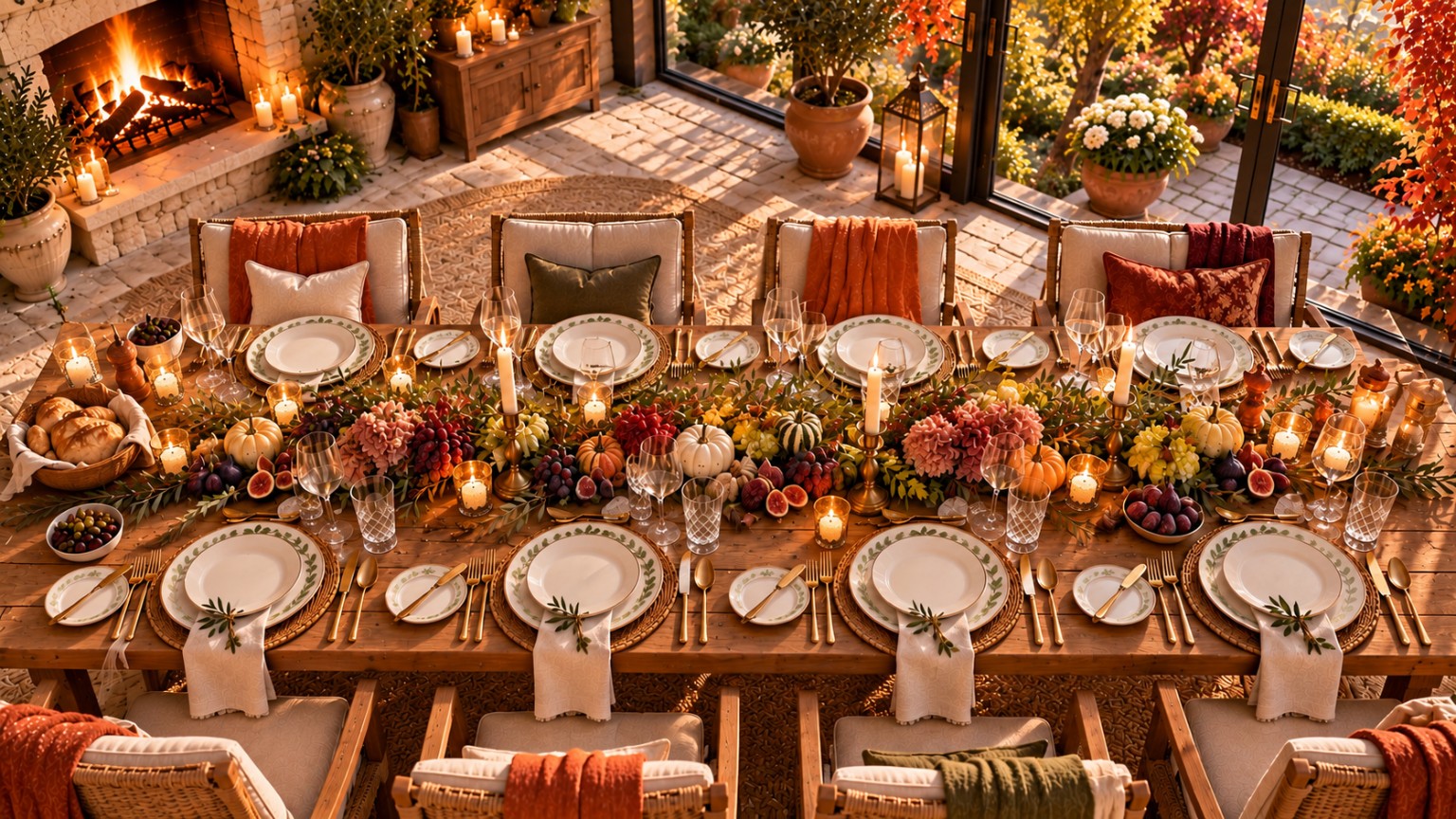
The beauty of a table comes not only from the pieces we choose, but from placing them well.
Leave enough room in front of each guest for them to move comfortably. Don't squeeze the chairs together. Over a long dinner, comfort matters as much as the look of the table.
Plates
The dinner plate sits at the centre of each place setting.
A simple charger plate or a naturally textured placemat can go beneath it.
Since this month's menu includes pumpkin soup, we can begin by placing the soup bowl on top of the dinner plate.
Our arrangement:
Placemat → Dinner plate → Soup bowl
Once the soup is finished, the bowl is cleared and the plate beneath is ready for the main course.
Forks, Knives and Spoons
The easiest rule to remember:
Forks on the left.
Knives and spoons on the right.
The blade of the knife faces the plate.
If more than one set of cutlery is used, you work from the outside in, following the order of the courses. The first piece to be used sits on the outermost side.
This is why the soup spoon can sit on the right, on the outside.
As for the dessert cutlery, there is no need to put it on the table at the start. Bringing a small dessert spoon along with the crème brûlée when it is served keeps the table simpler and more airy.
Bread Plate
The small bread plate sits to the upper left of the dinner plate.
If needed, a small butter knife can be laid across it.
Glasses
The glasses are grouped to the upper right of the plate.
At this table, rather than filling it with glassware, we choose only the pieces we will truly use.
A water glass and, if it is to be served, a wine glass are usually enough.
Fine, simple, clear glass does not disturb the natural character of this table; on the contrary, it catches the candle and firelight and lends the table a gentle shimmer.
A LITTLE SEASON IN PLACE OF FLOWERS
In October, some of the loveliest adornments for the table come not from the florist, but from the season itself.
Grapes…
Figs…
Olive branches…
Small pears…
Chestnuts…
And, of course, pumpkins.
But we use pumpkins with restraint.
Our aim is not a pumpkin-themed table. A few small pumpkins in cream, pale peach and natural orange tones are enough to convey the feeling of October.
Rather than putting larger pumpkins on the table, we can place them near the fireplace, beside a basket on the stone floor or in another corner of the winter garden.
That way the decoration is not crammed onto the table; it spreads through the whole space.
Using bunches of grapes naturally on the table is one of the loveliest details linking our table to the harvest story of Provence.
THE SEASON MOVES FROM TABLE TO PLATE
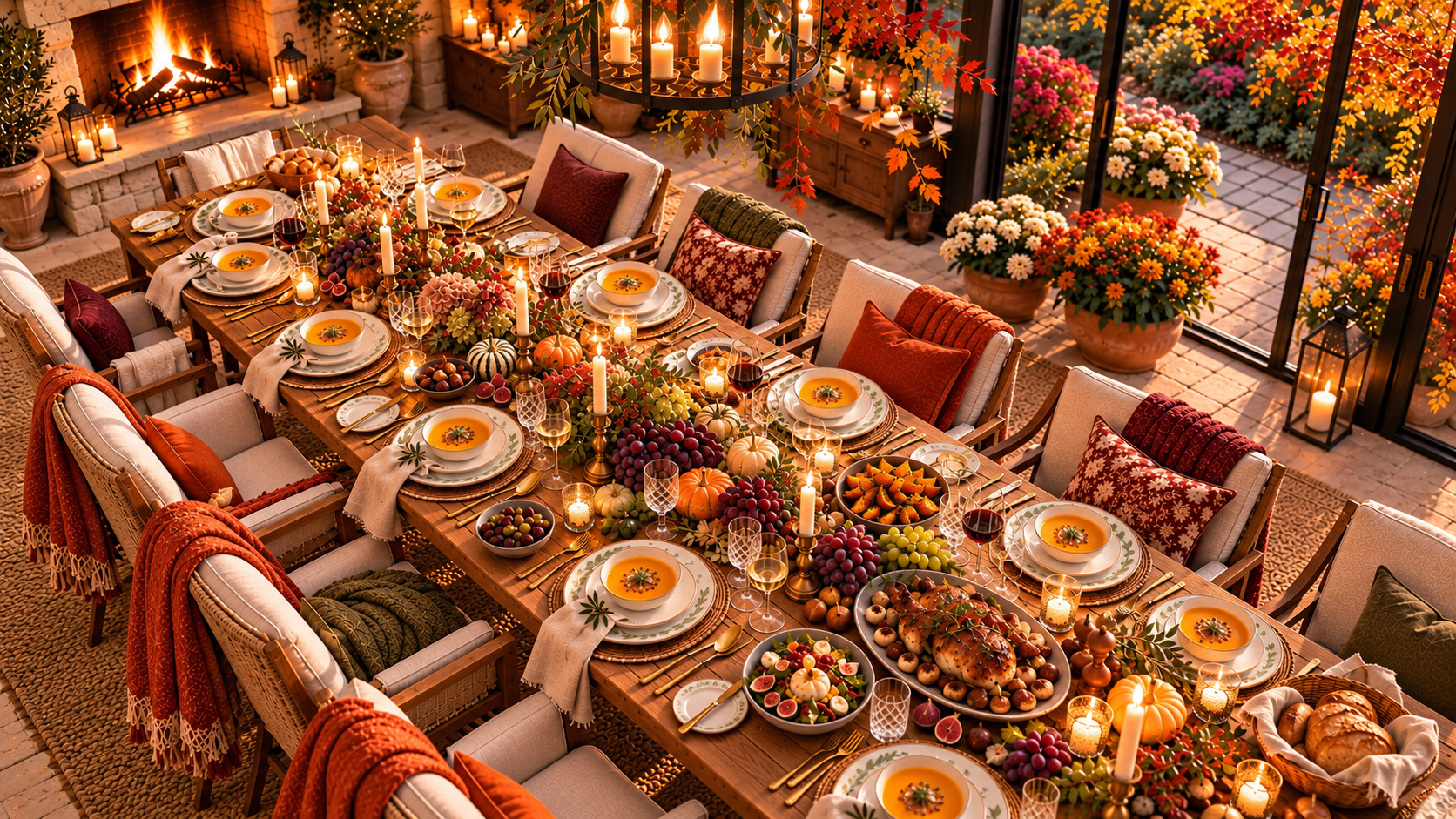
Another beauty of this table is that the decoration and the menu tell the story of the same season.
The three October dishes we prepared in Zarif Kitchen are this time the guests of the table.
We are not repeating the recipes here.
Instead, we look at how to present them.
To Begin
Pumpkin Soup
Served in a cream or ivory bowl, the warm colour of pumpkin soup blends effortlessly with the small pumpkins and amber tones on the table.
A very small, simple finishing touch on top is enough.
The soup itself already speaks of October.
Main Course
Chicken with Chestnuts & Wild Mushrooms
Rather than plating the main course individually in the kitchen, we can bring it to the table on a large, beautiful serving platter.
The warm tones of the chestnuts, mushrooms and chicken blend into the natural colours of the table.
Bringing the platter to the table also creates a small moment of sharing.
Someone passes the dish, another serves, the bread changes hands, the conversation carries on.
This is one of the things that most suits the spirit of the long Provençal table.
Finale
Pumpkin Crème Brûlée
We do not leave the dessert waiting on the table from the start.
The main course draws to a close, and the plates are cleared.
Meanwhile, the light outside fades a little further, the fire in the hearth grows more pronounced and the candles become one of the table's main sources of light.
Then the pumpkin crème brûlée arrives in small individual ramekins.
The amber of the caramelised surface, in the candle and firelight, completes the table's final picture.
And so the pumpkin is no longer merely an October symbol used in the decoration.
The season moves from the table to the plate.
ONE TABLE FROM DAY INTO EVENING
We will not set this table as though it were two separate tables.
We will lay it in the afternoon and watch it change over the course of the evening.
In the first hours, natural October light will pour in through the wide windows. The garden will still seem part of the table. The ivory linens, pale ceramics and wood will feel brighter.
Then the sun will slowly sink.
The colours of the garden will deepen.
As the world beyond the glass grows a little darker, the fire inside will keep burning.
The candles will be lit.
One of the shawls on the back of a chair will be drawn around someone's shoulders.
And without changing a single thing on the table, the afternoon Provençal table will become a warm October evening table.
So when you set the table, think not only of the plates and the decoration, but also of how the light will change.
Sometimes the most beautiful decoration a table can have is the sunset.
ONE LAST CHECK BEFORE THE GUESTS ARRIVE
Once the table is finished, rather than looking at it standing up, sit down in one of the chairs.
Like a guest.
Can you see the person opposite you with ease?
Can you reach your glass?
Is the bread plate in a comfortable spot?
When the main course platter arrives, is there room for it on the table?
Can you feel the warmth of the fire without it becoming uncomfortable?
Is there a shawl within reach for when the evening turns cool?
If the answer is yes, your table is ready.
Because an elegant table is not the one on which we place the most things.
Nor is it the one with the most expensive porcelain, the largest flowers or the most flawless decoration.
An elegant table is one at which the guest feels thought of.
Perhaps this is the most beautiful thing we can bring from Provence to our October table:
A few grapes from the harvest, a well-prepared meal, a crackling fire, a shawl drawn around the shoulders, conversations that linger and an evening when no one looks at the clock.
Because the beauty of some tables lies not in how they look, but in how late people rise from them.